Guide · Generators
Portable Generator Buyer's Guide
Start with the loads, voltage, fuel plan, and safe connection—not the biggest wattage number on the box.
How to Choose a Portable Generator Without Buying the Wrong One
Portable generators look simple until you actually start shopping for one.
Then suddenly you’re comparing:
- running watts
- starting watts
- inverter generators
- conventional generators
- gasoline
- propane
- dual fuel
- tri fuel
- 120 volts
- 240 volts
- runtime
- noise
- outlets
- transfer switches
It’s easy to get distracted by a giant wattage number on the box and completely miss the things that will determine whether the generator is actually useful.
If I were buying one for home backup, I’d make the decisions in this order:
- What do I actually need to power?
- How many running and starting watts does that require?
- Do I need 240V?
- Do I want gasoline, propane, or multiple fuel options?
- Do I care enough about noise and portability to buy an inverter generator?
- How am I safely connecting the generator to the equipment I want to run?
Everything else comes after that.
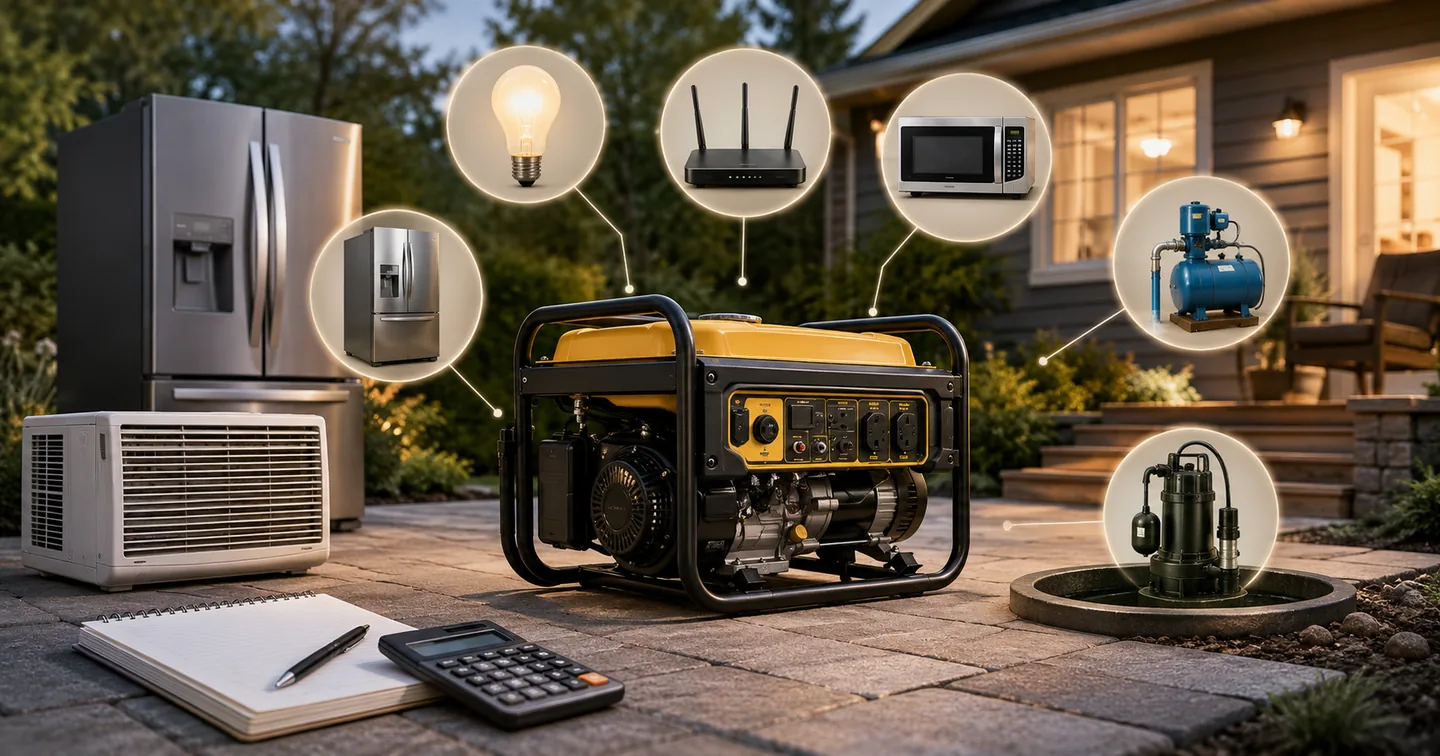
Start With What You Need to Power
This is the most important part.
Don’t start by saying:
I think I need a 5,000-watt generator.
Make a list instead.
For a home outage, that might include:
- refrigerator
- freezer
- furnace blower
- sump pump
- well pump
- lights
- Wi-Fi
- television
- microwave
- window air conditioner
Then decide which of those need to run at the same time.
That last part matters.
You probably don’t need the microwave, coffee maker, hair dryer, toaster, and space heater running simultaneously during a blackout.
A little load management can save you from buying a much larger generator than you actually need.
If you haven’t done this yet, use our Portable Generator Wattage Calculator before choosing a machine.
Running Watts and Starting Watts Are Different
Generators are usually advertised with at least two power numbers.
You might see something like:
6,500 starting watts / 5,000 running watts
The 5,000-watt number is what the generator can continuously provide under its rated operating conditions.
The larger starting or surge number is short-duration capacity.
That’s important because electric motors and compressors can briefly need much more electricity when they start.
That includes equipment like:
- refrigerators
- freezers
- sump pumps
- well pumps
- furnace blowers
- air conditioners
- air compressors
So don’t take a generator’s starting-watt number and treat it like continuous capacity.
If your household loads require 4,500 running watts, you need a generator whose running output covers that load.
Then make sure the generator has enough surge capacity for the largest motor startup too.
Don’t Size It Right on the Edge
If my calculated requirement were 4,800 running watts, I wouldn’t intentionally buy a generator rated for exactly 5,000.
I’d want some breathing room.
Actual appliance loads vary. Motors cycle. Someone plugs something in. Temperature and operating conditions can also affect equipment.
I’m not saying you need to double your calculated requirement.
I just wouldn’t build an emergency power system around everything working perfectly at 99% of the generator’s capacity.
Do You Need 240V?
This is one of the easiest things to overlook.
A generator can have enough watts and still be the wrong generator for your house.
Some equipment may require 240V. Common examples can include well pumps, certain sump pumps, larger shop equipment, some HVAC equipment, electric ranges, and other larger household loads.
Not every example above is always 240V. You need to check the actual equipment.
But if you’re planning to connect a portable generator to selected circuits in your home’s electrical system, I would pay close attention to whether the generator provides the voltage and receptacle configuration your installation requires.
Don’t assume wattage answers that question.
Conventional Generator vs. Inverter Generator
This is probably the next big decision.
Both use an engine and fuel to make electricity. But they go about it differently.
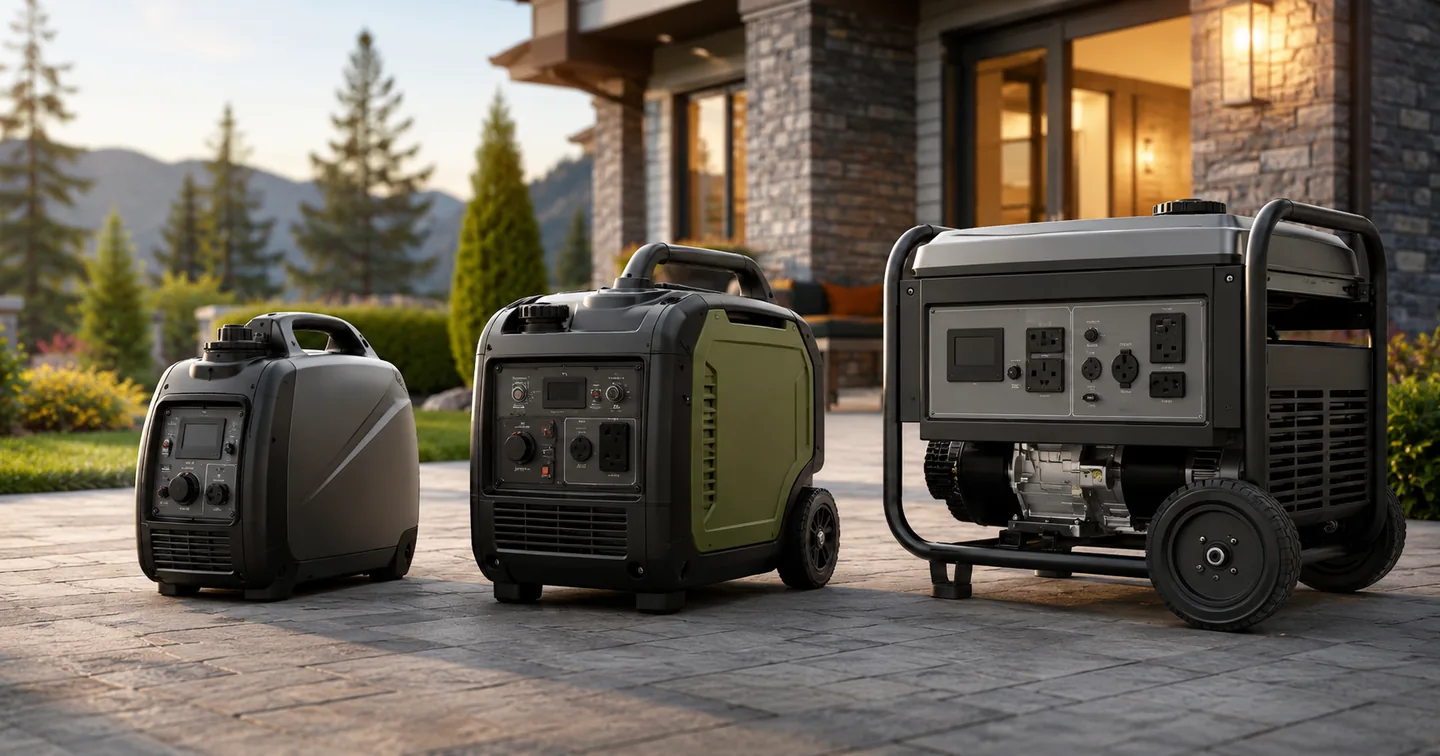
Conventional Portable Generator
This is the classic open-frame generator most people picture.
You usually get a lot of wattage for the money. For home backup, construction, pumps, and other larger loads, that can be exactly what you want.
The tradeoffs tend to be more noise, more weight, less pleasant operation, and an engine that often runs at a more constant operating speed.
If my main goal were emergency home backup and I needed substantial 120/240V output without spending a fortune, I wouldn’t dismiss a conventional portable generator at all.
Inverter Generator
Inverter generators electronically condition their output and commonly adjust engine speed with load.
In practice, the things I’d care about are:
- quieter operation
- generally better behavior at lighter loads
- easier portability in many models
- stable electrical output
- better fit for camping, RV use, electronics, and places where noise matters
Modern inverter generators can also get quite large, so this isn’t purely a small-generator category anymore.
The downside is generally price. You often pay more per watt for the nicer operating experience.
Which Would I Buy?
For camping or an RV? I’d strongly lean inverter.
For a small home-backup setup where I care about noise? Probably inverter.
For a large emergency generator that spends 360 days a year sitting in storage and only comes out when a storm knocks the power out? I’d be much more willing to buy a conventional open-frame generator and put the savings somewhere else.
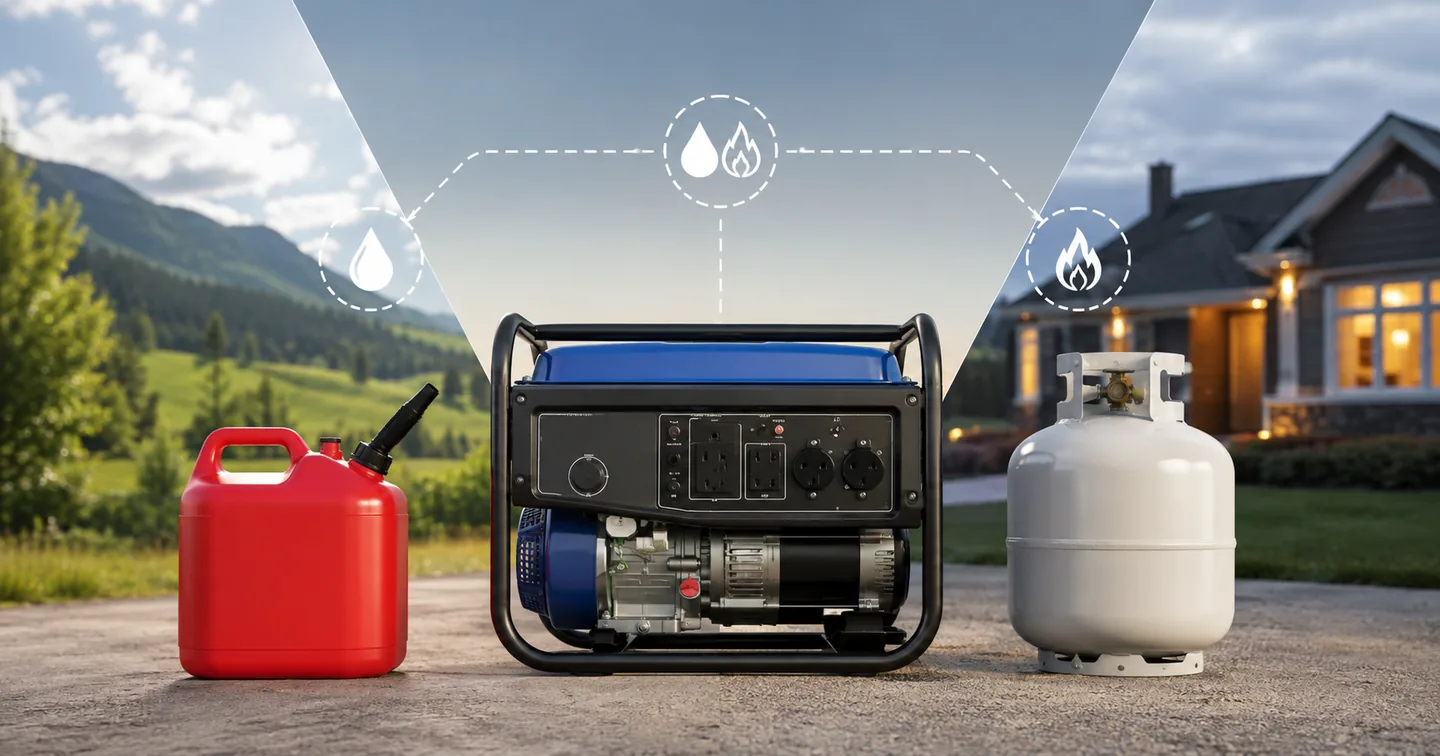
Gasoline vs. Propane
Fuel type matters more than I used to think.
Gasoline
Gasoline is easy to find during normal conditions, easy to pour into the generator, generally provides the highest rated output, and is familiar to most homeowners.
The downside is storage. Gasoline deteriorates, can create carburetor problems when equipment sits, and keeping a significant amount at home creates storage and fire-safety considerations.
Propane
Propane is interesting for backup power because it stores differently. You’re not worrying about gasoline sitting in a carburetor or a gas can slowly degrading in quite the same way.
The tradeoff is that a multi-fuel generator will commonly produce somewhat less electrical output on propane than it does on gasoline. Check the manufacturer’s separate rating for each fuel.
Dual-Fuel Generators
This is probably what I would lean toward for a lot of homeowners.
A dual-fuel generator typically lets you operate on either gasoline or propane. You’re not burning both simultaneously. You’re choosing the fuel that makes sense at the time.
That’s useful during an emergency. You’re buying flexibility, and for an emergency tool, flexibility has real value.
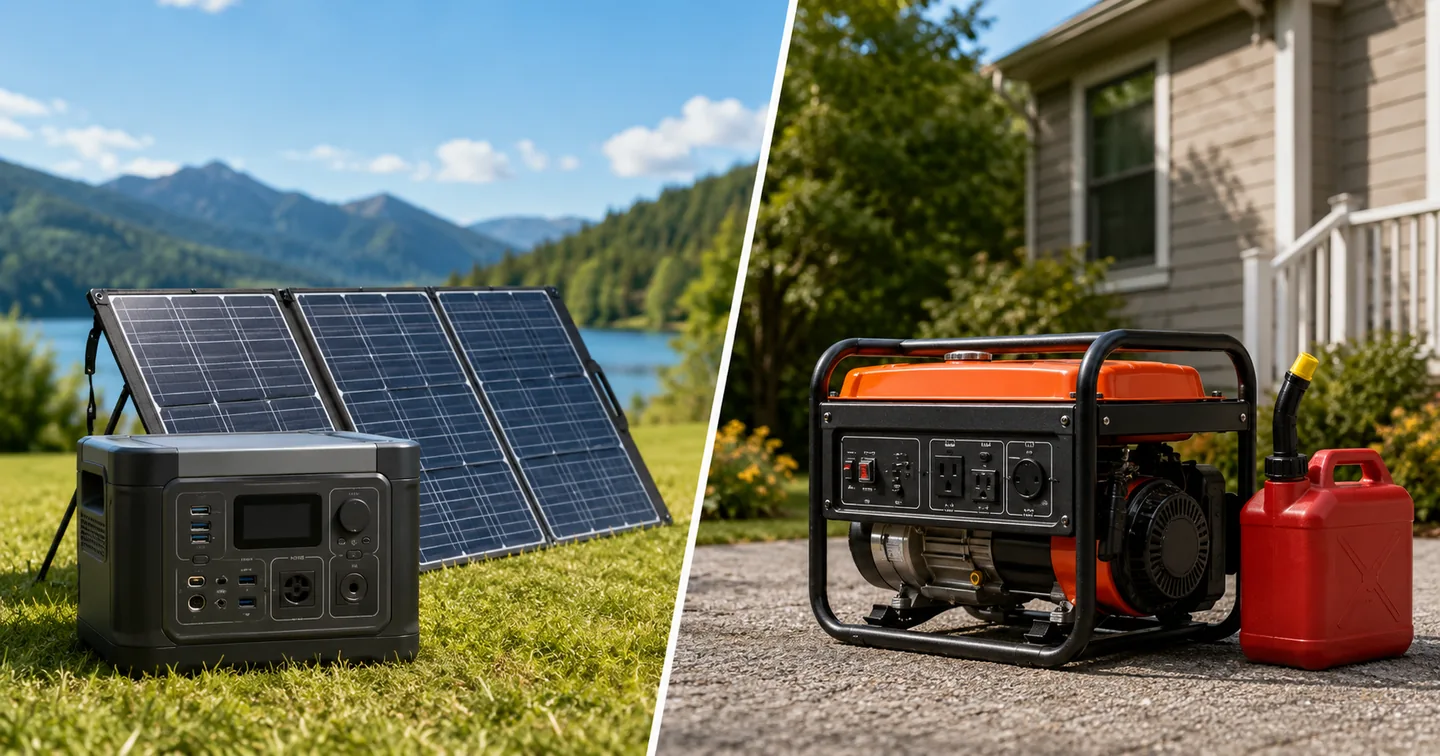
Read our full gas vs. propane vs. dual-fuel generator comparison before deciding which fuel plan fits your property. If quiet stored backup is part of the plan, compare a solar generator and gas generator too.
What About Tri-Fuel?
Tri-fuel generators add natural gas to the mix.
If your home already has natural-gas service, that gets interesting. A properly configured generator may be able to use that fuel source without you repeatedly carrying gas cans or swapping propane cylinders.
But don’t assume connecting a portable generator to household natural gas is as simple as finding a hose that fits. The generator needs to be designed for the fuel, and the gas supply needs to meet the manufacturer’s requirements.
This is another area where I’d use proper equipment and professional help where the installation requires it.
Also check the power ratings carefully. Tri-fuel generators commonly produce different maximum output depending on which fuel they’re using.
Runtime Isn’t a Fixed Number
Generator listings love runtime claims. Treat them as comparison points, not promises.
Runtime depends heavily on generator load, fuel type, tank size, engine, temperature, and operating conditions.
When comparing models, make sure you’re comparing runtime claims at similar loads. A generator powering a refrigerator and some lights isn’t doing the same job as the same machine running a well pump, window AC, furnace blower, and microwave.
Noise, Weight, and Starting
If the generator is going to run for hours, noise stops being a spec-sheet curiosity. It becomes part of your life—and your neighbor’s life.
The word portable gets stretched pretty far in generator marketing. Think about storage and the route the generator needs to travel during an outage: out of a garage, around the house, across gravel, through a gate, or over uneven ground.
Once generators get larger, I like electric start. But electric-start generators usually have a battery of their own, and that battery becomes another maintenance item. Check whether the machine also provides a manual recoil backup.
CO Shutoff Is Worth Having
Modern generators increasingly include carbon-monoxide detection systems designed to shut the generator down if dangerous CO accumulates around it.
I think that’s a worthwhile safety feature.
I would still operate the generator correctly. A CO shutoff system does not make it safe to operate a portable generator in a garage, shed, house, basement, or near doors and windows. Portable combustion generators belong outside, well away from the home, with exhaust directed away from buildings. See current CPSC generator safety guidance.
Outlets Matter
Look at the actual receptacles. Don’t just count them.
Depending on what you’re doing, you may care about standard 120V household-style receptacles, higher-amperage locking receptacles, 120/240V output, RV receptacles, USB ports, and transfer-switch/inlet compatibility.
For home backup, I’d figure out how the generator will connect to the home before I buy it. That lets the electrical requirements influence the generator instead of buying a machine and trying to make it fit afterward.
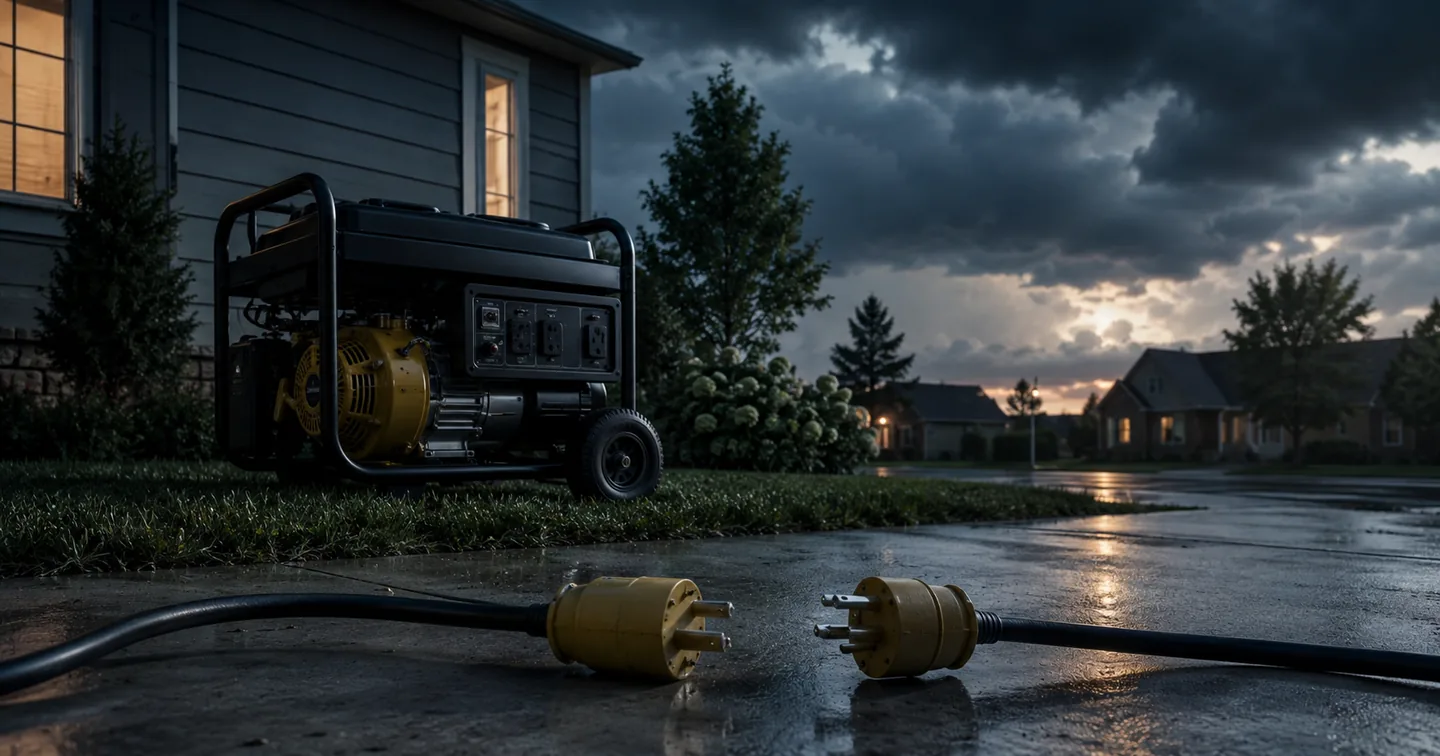
Don’t Backfeed the House
If you want to power household circuits, use proper transfer equipment.
Do not plug a portable generator into a dryer outlet, range outlet, or ordinary receptacle to try to feed the home’s wiring backward.
That’s generator backfeeding. It can create a serious shock hazard inside and outside the home and can endanger utility workers. Read Beware of Backfeeding before planning a house connection.
Generator Size vs. Fuel Consumption
A larger generator isn’t free capacity. A bigger engine generally means more fuel, more weight, more storage space, and more money.
If you genuinely need 8,000 running watts, buy enough generator. But if your actual emergency load is 2,500 watts, I wouldn’t automatically buy a huge generator because the larger number feels safer.
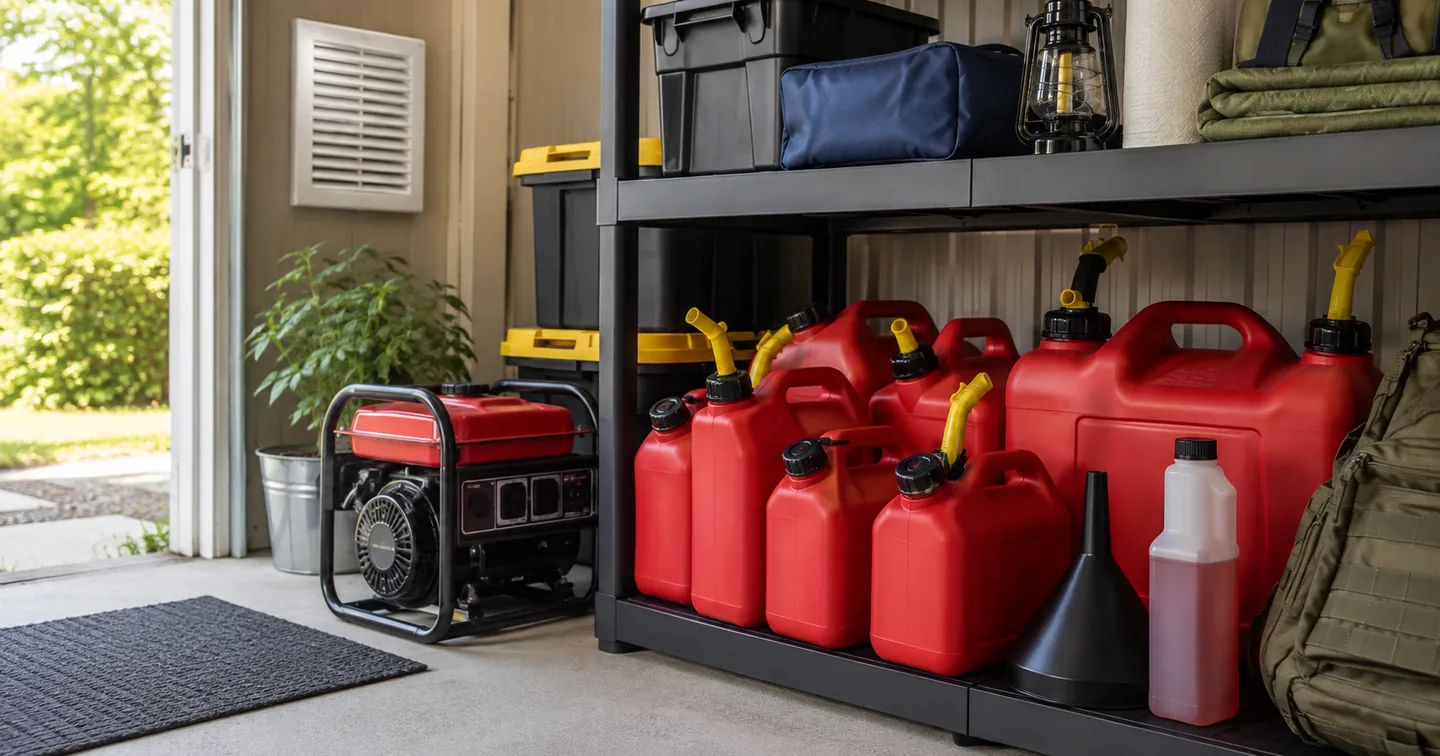
Sometimes the better emergency plan is a smaller generator plus smarter load management. Use safe gasoline-storage planning when you work out the fuel side.
What I Would Buy for Different Uses
Basic Home Essentials
For refrigeration, internet, lights, and a few electronics, I’d look hard at a moderate-size inverter generator. Quiet operation and fuel efficiency at lighter loads start to matter.
Home With a Well Pump or Several Large Loads
I’d start with the wattage calculation and voltage requirements. This is where a larger 120/240V portable generator may make considerably more sense. Fuel flexibility would also move higher on my list.
RV or Camping
Inverter generator. Noise, portability, and light-load operation matter too much for me to want a giant open-frame machine sitting next to the campsite.
Emergency Home Backup
I’d strongly consider dual fuel. For some homes with natural-gas service, tri fuel would get my attention too. I’d rather have two ways to keep the machine running during an extended outage than depend completely on one fuel.
Three generators that represent the categories above
Small Premium Inverter
Honda EU2200i / EU2200iTAG Portable Inverter Generator
Honda
Premium
If I only needed to cover a refrigerator, lights, internet, and a few smaller loads, I would rather live with a Honda EU2200i-sized inverter than drag a much larger home-backup machine around. It is a premium small-load and recreational pick, not a whole-home answer.
Check current price at AmazonMid-Size Dual-Fuel Inverter
Champion 4500-Watt Dual-Fuel Inverter Generator
Champion
Premium
This is the middle ground I would compare if a tiny inverter feels limiting but a large conventional generator feels like too much machine. The inverter design and gasoline-or-propane flexibility are the appeal; check the current ratings for the fuel you plan to use.
Check current price at AmazonLarge Tri-Fuel Home-Backup Example
Westinghouse WGen9500TFc Tri-Fuel Portable Generator
Westinghouse
High-output
If your home has natural-gas service and you are already considering a large WGen-class machine, I would compare this tri-fuel version before automatically buying dual fuel. The convenience is real, but natural-gas output is a separate rating to check.
Check current price at AmazonWhat Matters Most?
Not the biggest number on the box.
I’d prioritize:
- Enough running watts.
- Enough startup capacity.
- Correct voltage.
- Appropriate outlets.
- Fuel that fits your emergency plan.
- A safe way to connect the loads.
- Portability you can actually live with.
- Noise appropriate for how you’ll use it.
Get those right and most of the rest is preference.
Portable generators are pretty simple machines. Choosing the right one mostly comes down to being clear about the job you’re asking it to do.
Related guides
guide · Generators
What Size Portable Generator Do I Need?
comparison · Generators
Gas vs. Propane vs. Dual-Fuel Generators
comparison · Generators
Solar Generator vs. Gas Generator
guide · Generators
Beware of Backfeeding
guide · Generators