Guide · Generators
How Often Should You Change Generator Oil?
Generator oil schedules differ by model. Check the oil before use, track hours during an outage, and follow the maintenance schedule in the owner's manual for your exact generator.
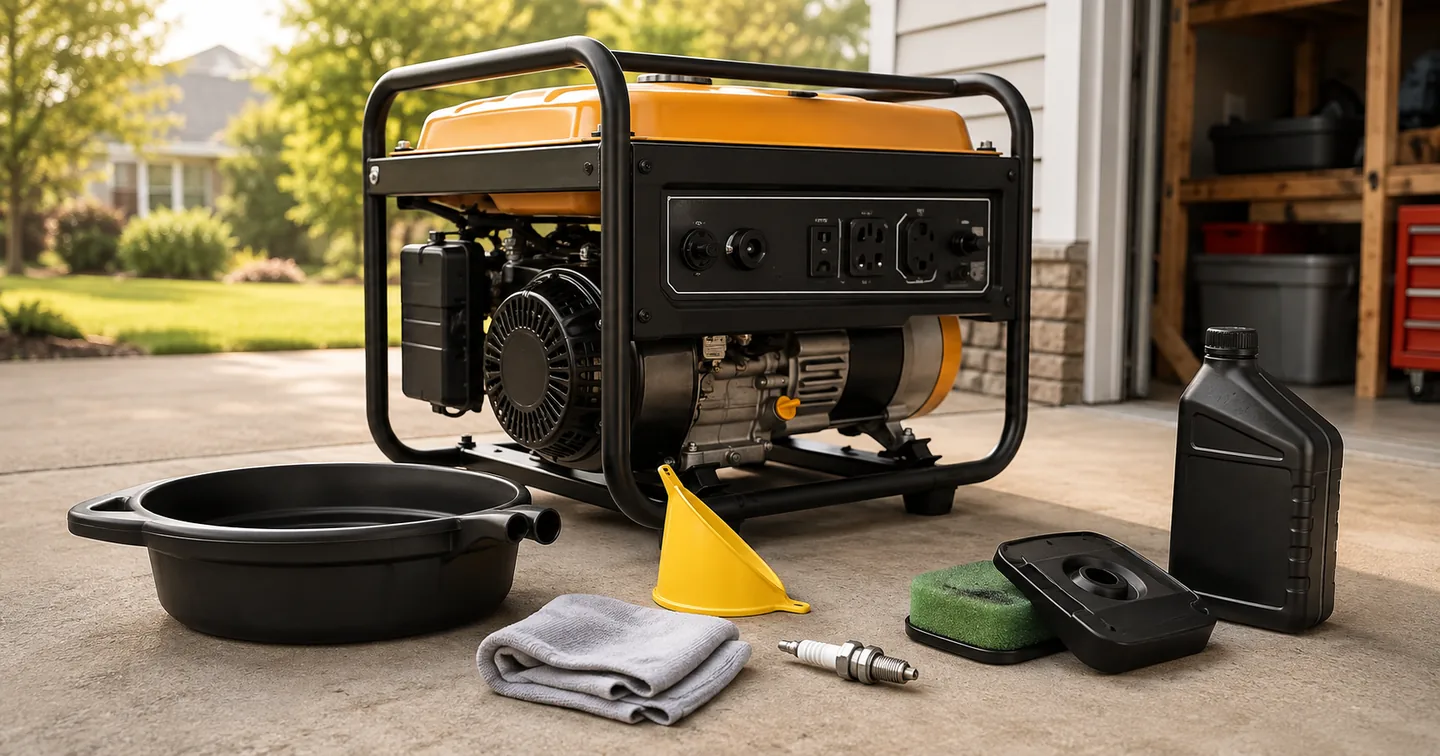
A portable generator can spend most of the year sitting in the garage and then suddenly be expected to run for hours—or even days—during a power outage.
That makes oil maintenance a little different from something like your lawn mower.
You may barely put any hours on the generator during a normal year. Then one bad storm can add 50 hours in a weekend.
If you own a gas-powered portable generator, checking the oil should be one of the first things you do before you start it.
And if you’re running it for an extended outage, don’t assume the oil can wait until the power comes back on.
Generator safety: Operate portable generators outdoors, at least 20 feet from the home, with exhaust directed away from doors, windows, and vents. Never operate a portable generator inside a house, garage, basement, shed, or other enclosed space. See the CPSC’s generator safety guidance.
The Short Answer
There isn’t one oil-change interval that applies to every generator.
Follow the maintenance schedule in the owner’s manual for your exact generator.
Depending on the manufacturer and model, you may see:
- an early oil change during the break-in period
- regular oil changes based on engine hours
- shorter intervals when operating under heavy loads, high temperatures, dusty conditions, or other severe conditions
As a real example of why the manual matters, one Champion portable-generator manual calls for its first oil change after only 5 hours of operation and then every 100 hours, with more frequent changes under heavy load or in hot conditions.
Generac says many of its portable generators need their first oil change after roughly 20 to 30 hours and then every 100 hours of runtime.
That’s a pretty big difference for two machines doing essentially the same job.
So don’t take a generic number from the internet and assume it applies to your generator.
Check the Oil Before You Need the Generator
The middle of a power outage is a terrible time to discover that the generator has almost no oil in it.
I would check the oil level before starting the generator, especially if it has been sitting for months.
If you’re running it continuously during an extended outage, keep track of the engine hours too.
A generator that runs 24 hours a day can reach a 100-hour maintenance interval in just over four days.
That’s much faster than people tend to think about when they’re focused on keeping the refrigerator, well pump, lights, and everything else running.
Some generators have hour meters that make this easy.
If yours doesn’t, write down roughly when you started running it.
Don’t Rely Completely on Low-Oil Shutdown
Many modern portable generators have a low-oil shutdown system.
That’s useful protection.
I still wouldn’t treat it as the normal way to know when your generator needs oil.
The goal isn’t:
Run it until the generator shuts itself down.
The goal is to keep the oil at the correct level so the engine stays properly lubricated in the first place.
Think of low-oil shutdown as a last line of protection, not a maintenance schedule.
What Kind of Oil Does a Generator Use?
This is another place where I’d go directly to the manual.
You’ll commonly see oils such as:
- SAE 30
- 10W-30
- synthetic 5W-30
but that does not mean you can automatically use whichever one happens to be sitting in your garage.
The correct oil depends on the engine and the temperature range where you’re operating it.
What Do Numbers Like 10W-30 Mean?
The numbers describe the oil’s viscosity behavior at different temperatures.
The number before the W relates to cold-temperature performance.
The second number relates to the oil’s viscosity when the engine is hot.
For a generator that may be needed during both winter storms and summer outages, temperature matters.
But rather than trying to create our own universal temperature chart, I’d use the chart in the generator’s owner’s manual.
The manufacturer already knows what that specific engine is designed to use.
Synthetic vs. Conventional Generator Oil
Synthetic oil can be a good choice when the manufacturer allows it, particularly across a wider range of temperatures.
But again, I wouldn’t make a blanket rule that every generator should immediately be filled with synthetic oil.
Use the oil specification and viscosity recommended for your engine.
If the manufacturer provides several acceptable options, then you can choose between them based on temperature, usage, and how you maintain the generator.
How to Change the Oil in a Portable Generator
Changing generator oil isn’t especially complicated, but the exact location of the drain plug, fill point, oil capacity, and procedure varies between machines.
Use your owner’s manual as the actual procedure for your generator.
In general, the job looks something like this.
1. Shut the Generator Down
Disconnect the electrical loads and shut the generator off according to the manufacturer’s instructions.
Do not attempt to service a running generator.
If it has been operating, remember that the engine, muffler, exhaust, and oil may be extremely hot.
Let it cool enough to work on safely.
2. Put an Oil Pan Under the Engine
Locate the oil drain point specified in the manual.
Depending on the generator, this might be:
- a drain plug
- a drain bolt
- a drain hose
- another manufacturer-specific arrangement
Put a suitable container underneath before opening it.
3. Drain the Used Oil
Remove the drain plug or open the drain system as instructed by the manufacturer.
Let the old oil drain into the container.
This is also a good time to look at the condition of the oil.
Oil naturally darkens with use.
But if you see something unusual—such as obvious contamination or excessive metallic debris—I wouldn’t just refill the engine and forget about it.
That may be worth investigating before relying on the generator again.
4. Reinstall the Drain Plug
Once the oil has drained, reinstall the plug or close the drain according to the manual.
Don’t guess at tightening specifications if the manufacturer provides them.
5. Add the Correct Oil
Use a funnel and add the manufacturer’s specified oil.
Don’t assume the generator needs the entire bottle.
Portable engines can have relatively small oil capacities, and overfilling isn’t helpful either.
Use the dipstick, fill mark, or procedure specified in the manual to set the correct oil level.
6. Check for Leaks
Before putting everything away, make sure oil isn’t leaking around the drain point or fill area.
Then dispose of the used oil properly.
Most auto-parts stores, recycling facilities, or municipal hazardous-waste programs can tell you where used engine oil is accepted locally.
For model-specific oil-change instructions and severe-condition maintenance guidance, see Generac’s portable-generator oil-change guide.
Don’t Check the Dipstick Like a Car Unless the Manual Says To
This is an easy detail to overlook.
Depending on the engine, the manufacturer may tell you to:
- screw the dipstick all the way in before reading it
- rest it on the threads without screwing it in
- fill to a particular opening or mark
Those methods can give different readings.
Follow the procedure for your engine instead of assuming every dipstick works like the one in your car.
Extended Power Outages Change the Maintenance Schedule
This is where generator maintenance becomes easy to forget.
Suppose the power is out for four days.
If your generator runs nearly continuously, you’re approaching 100 hours of engine time.
That can mean an oil change becomes necessary during the outage, not afterward.
I’d keep a few basic maintenance items with the generator before storm season:
- the correct engine oil
- a funnel
- an oil drain pan
- shop towels
- whatever basic tools the manufacturer specifies
- a spare air filter if appropriate
- a spare spark plug if appropriate
You don’t need to turn the garage into a generator repair shop.
But keeping a quart or two of the correct oil around is a lot easier than trying to find it when every hardware store in town is dealing with the same outage.
Before an outage, it also helps to decide what the generator actually needs to support. Our portable generator wattage calculator can help you start with those loads.
Other Generator Maintenance Worth Checking
Oil is only part of the maintenance schedule.
If you’re already going through the manual, I’d look at what else is coming due.
Air Filter
The engine needs clean airflow.
Dust, dirt, grass, and debris can eventually restrict the filter.
But don’t automatically wash your generator’s air filter in soap and water.
Some generators use washable foam elements.
Others use paper or other filter designs that are maintained differently.
Check the manual for your particular filter.
If the generator is running in a particularly dusty environment, the manufacturer may recommend inspecting or servicing it more frequently.
Spark Plug
Spark plugs also have inspection, cleaning, adjustment, and replacement intervals.
Again, I’d follow the manufacturer’s schedule rather than pulling the plug apart every time you change the oil.
If the generator becomes difficult to start, runs poorly, or has accumulated enough hours to reach the scheduled service interval, the spark plug is one of the things worth checking.
Use the correct replacement plug and specified gap for the engine.
Spark Arrestor
Many portable generators also have a spark arrestor in the exhaust system.
Depending on the machine, that may have its own inspection and cleaning schedule.
This is one of those pieces of maintenance that’s easy to overlook because you’re not looking at it every time you use the generator.
Fuel Matters Too
A generator with perfect engine oil can still refuse to start because you left old gasoline sitting in the carburetor for months.
If your generator uses gasoline, follow the manufacturer’s storage instructions.
Fuel maintenance becomes particularly important for a generator that may sit unused for long periods between outages.
The worst generator problem isn’t necessarily one that happens while you’re using it.
It’s the generator that won’t start when you finally need it. If that happens, work through the basic checks in Generator Won’t Start?.
Make a Generator Maintenance Kit
I’d keep the maintenance supplies with the generator.
At minimum:
- correct oil
- funnel
- drain container
- basic hand tools required by the generator
- owner’s manual or a saved digital copy
Depending on the model, I’d consider keeping:
- spare spark plug
- replacement air filter
- fuel treatment recommended by the manufacturer
You’re probably not going to remember the exact oil specification two years from now when a windstorm knocks the power out.
Having everything together eliminates that problem.
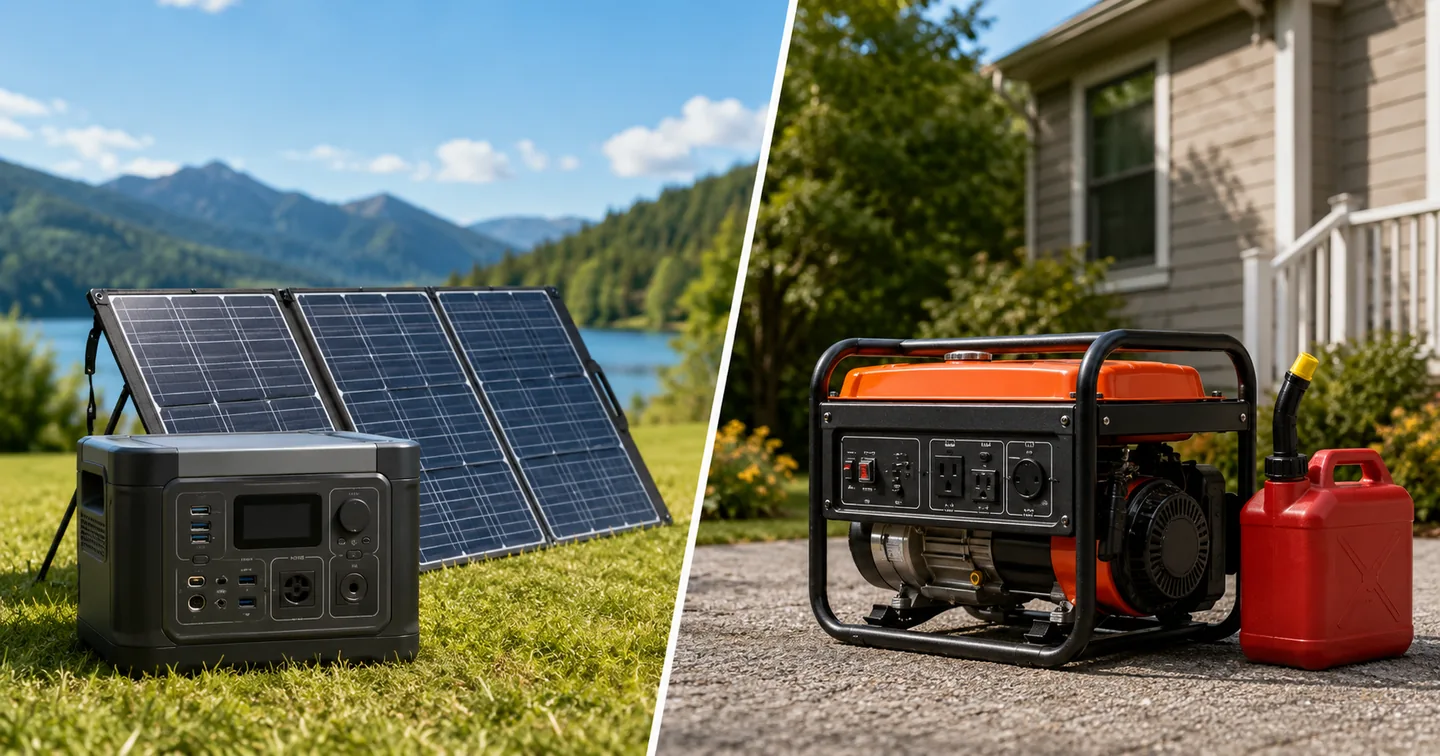
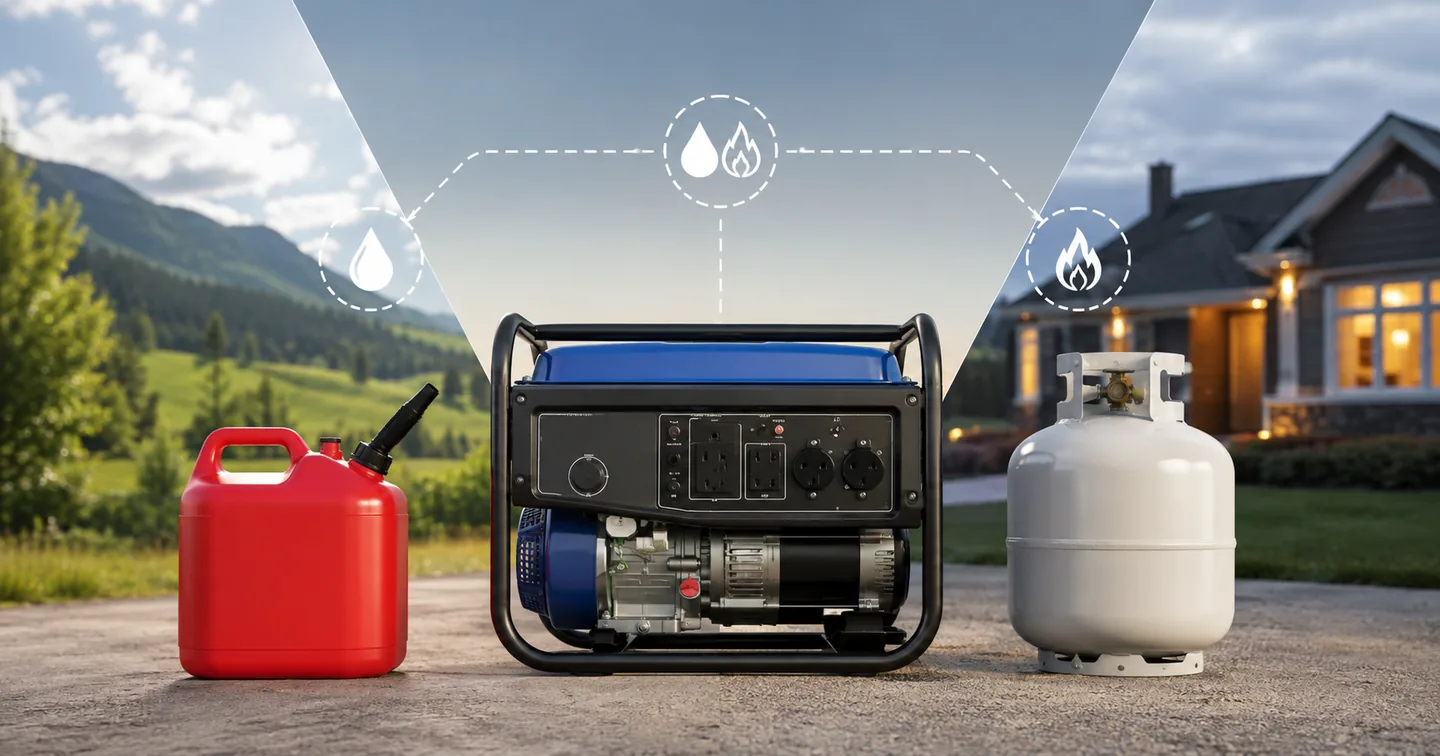
For related safety planning, read Beware of Backfeeding. If you are still deciding which type of backup power makes sense, compare solar generators and gas generators or gas, propane, and dual-fuel generators.
The Owner’s Manual Wins
You’ll find plenty of rules online saying things like:
Change generator oil every 50 hours.
or:
Change it every 100 hours.
Those can be useful examples, but they’re not the maintenance schedule for your particular generator.
Different manufacturers—and even different generators from the same manufacturer—can specify different intervals.
So my rule would be simple:
Check the oil before use, keep track of engine hours during long outages, and follow the maintenance schedule in your generator’s manual.
It’s a pretty small amount of maintenance for a machine you’re trusting to work during one of the worst possible times for it to fail.
Related guides
guide · Generators
Generator Won't Start? Check These Things First
guide · Generators
Beware of Backfeeding
guide · Generators
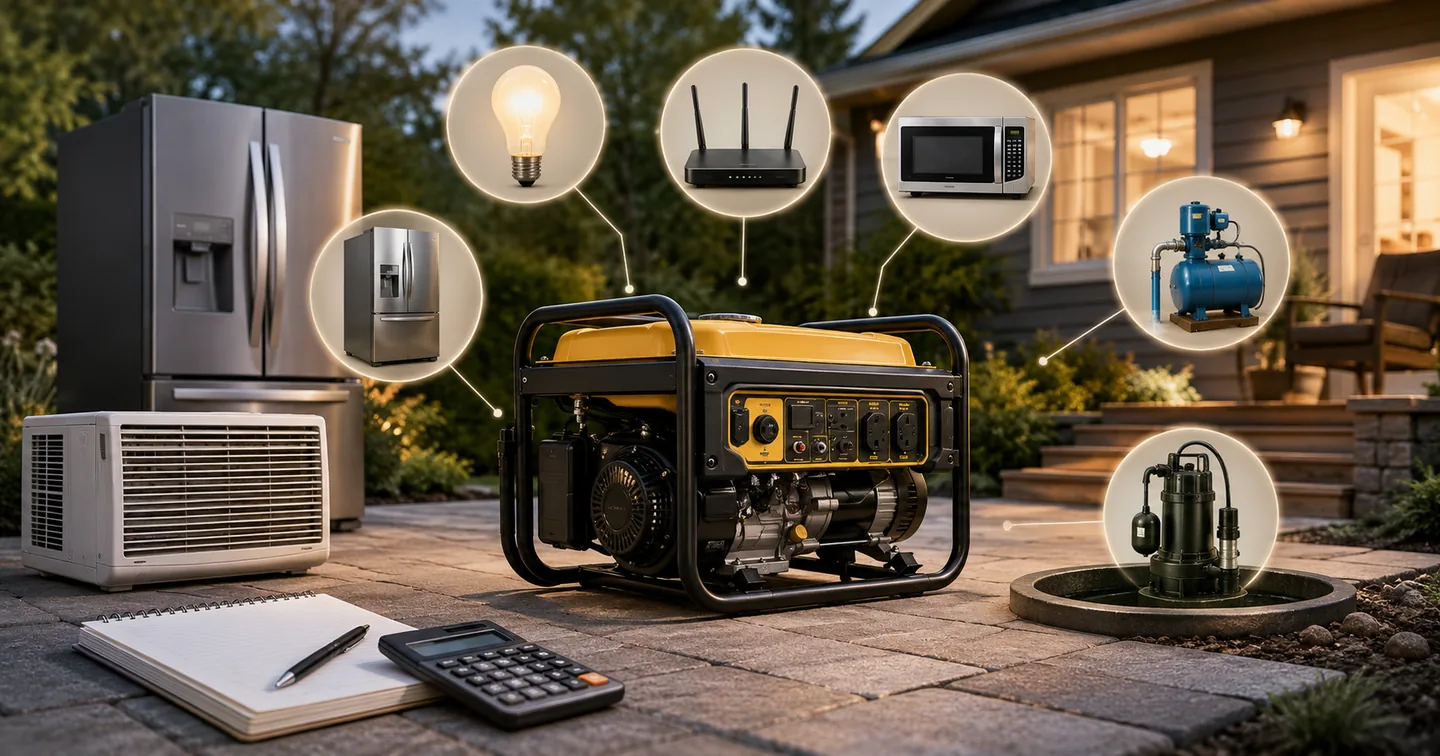
What Size Portable Generator Do I Need?
comparison · Generators
Solar Generator vs. Gas Generator
comparison · Generators