Guide · Yard size
What Mower Makes Sense for One Acre? Compare the Time Before Buying
Compare walk-behind, lawn tractor, and zero-turn options for an acre of grass with transparent time estimates, access checks, and ownership questions.
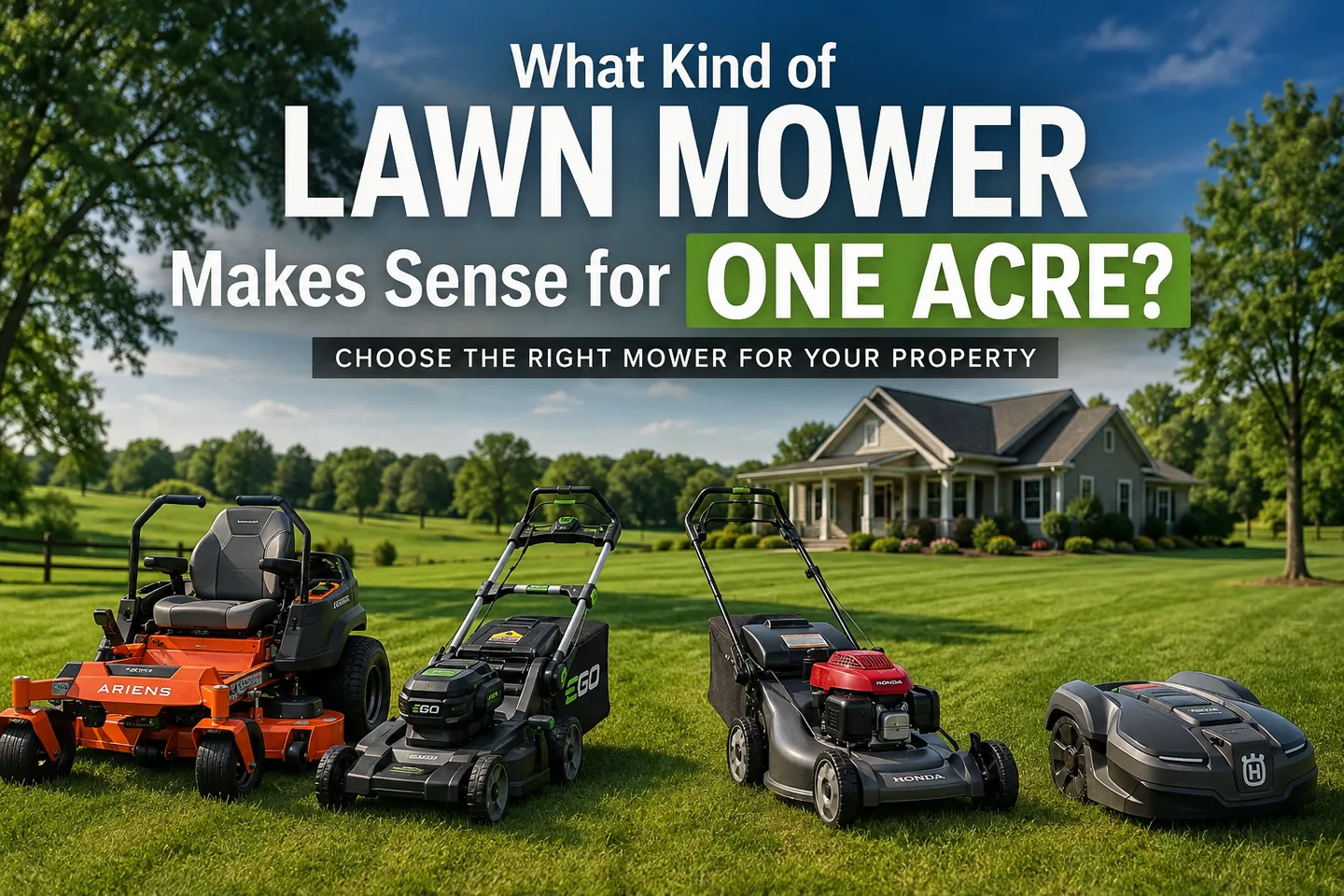
A 21-inch mower can cut an acre. The question is whether you want to spend that long behind it every time the grass needs cutting.
Before comparing machines, check whether you have an acre of grass or an acre of property. A house, driveway, woods, and garden can take a substantial amount of mowing out of that number.
The Short Answer
For a full acre of mostly open, suitable turf, I’d compare a lawn tractor and a zero-turn before buying another standard walk-behind. A wide walk-behind remains an option if you prefer walking and accept the time involved.
For a one-acre lot with much less grass, narrow gates, or disconnected lawn sections, a walk-behind may still be the easier machine to own.
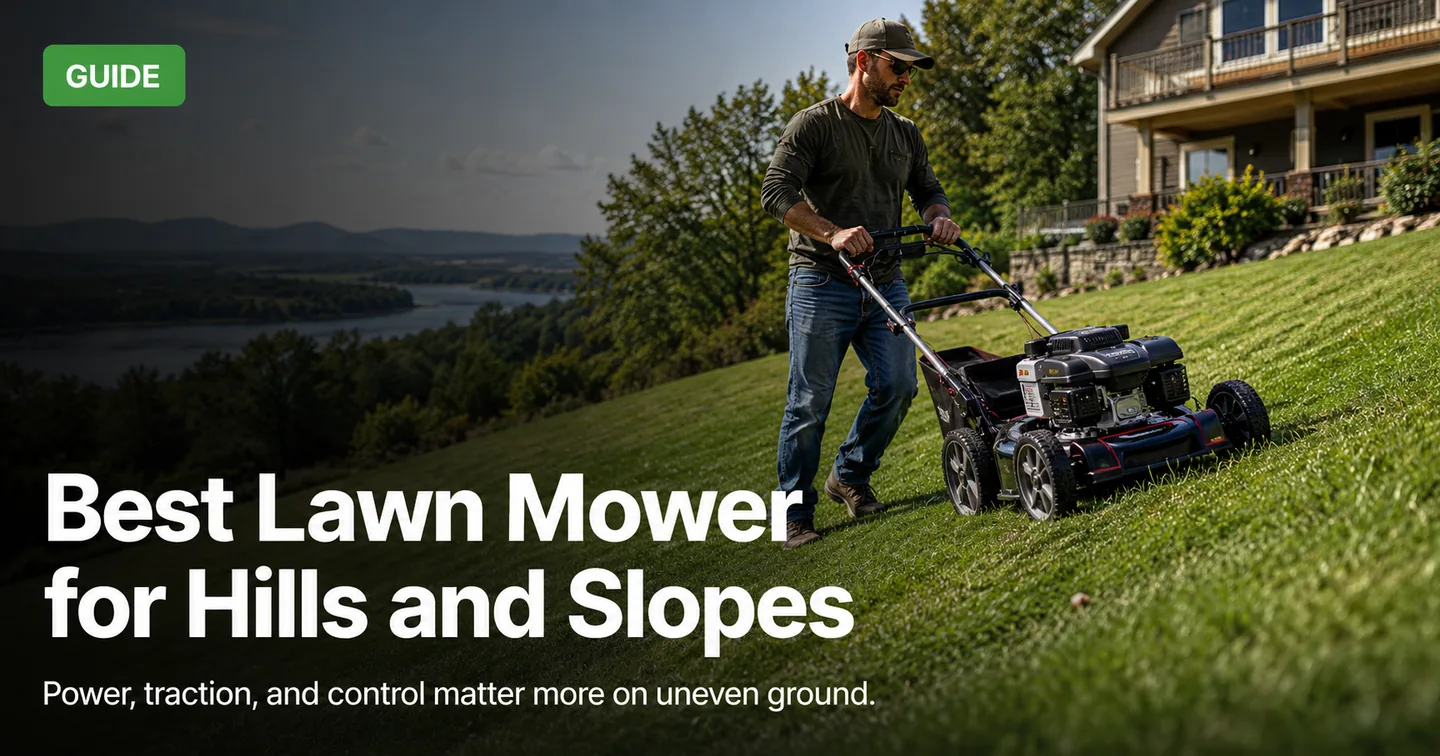
I would not choose riding equipment for an unsuitable slope just to get the lawn done faster.
How long would each mower take?
These figures are our own calculations. They assume one acre of grass, a constant travel speed, and 75% efficiency for overlap and ordinary turns. They exclude bag emptying, fueling or charging, trimming, preparation, and cleanup.
| Mower width | Assumed travel speed | Modeled cutting-route time |
|---|---|---|
| 21-inch walk-behind | 2.5 mph | 151 minutes |
| 30-inch walk-behind | 2.5 mph | 106 minutes |
| 42-inch rider | 4 mph | 47 minutes |
| 48-inch rider | 4 mph | 41 minutes |
The method is explained in our mower-size guide. These are planning examples, not tested completion times. Use a slower speed and lower efficiency if your property requires them.
Notice the difference between changing mower categories and adding a few inches. In this example, moving from a 21-inch walk-behind to a 42-inch rider cuts about 104 minutes from the route. Moving from a 42-inch rider to a 48-inch rider saves about six minutes.
I’d care a lot more about access, controls, local service, and storage than those last six minutes.
Lawn tractor or zero-turn?
Start with the chores you expect the machine to do.
| Question | What I’d check |
|---|---|
| Mostly mowing open turf? | Compare both categories on the actual route; ask for a controls demonstration |
| Want to use a cart, sweeper, or other attachment? | Check the exact mower’s approved attachments and towing limits |
| Lots of trees and beds? | Compare usable turning space and how much trimming remains |
| A fenced section or narrow side passage? | Measure the mower’s operating width and the turns into the opening |
| A slope, ditch, pond, or drop-off? | Start with the manual’s restrictions and safe separation requirements |
| Need a grass collection system? | Price the complete compatible system and check its added width and storage space |
There are tractors that won’t do the attachment work you have in mind and zero-turns with approved towing options. The category name doesn’t settle that question. Ask about the exact model and attachment together.
For more detail, see lawn tractors versus garden tractors.
A wider walk-behind is a deliberate compromise
The modeled 30-inch route is about an hour and three-quarters before other tasks. That may be fine if you enjoy the walk, already own the mower, or need access that rules out a rider.
It may be a poor purchase if your main goal is to reclaim weekend time.
Self-propelled drive reduces the pushing effort, but you still walk the route. Compare the machine’s weight and handling at the end of a pass as well as its width. A larger deck that is awkward around every tree can turn an apparent upgrade into a different annoyance.
Include the second mower in the decision
Walk the whole property and mark anything the new machine cannot reasonably mow. That might be a fenced backyard, a narrow strip, a bank, or a section separated by steps.
If you’ll keep a small mower for those areas, estimate its time separately. Don’t treat the acre as one open rectangle and assume the rider will replace every pass.
A problem area needs its own plan. For a steep bank, that might mean a different landscape treatment or professional maintenance. University of Minnesota Extension discusses alternatives to mowing steep slopes.
Put the time saving against the extra cost
Here is a hypothetical comparison, using your own quotes and time estimates:
| Input | Example |
|---|---|
| Extra purchase cost for the option you’re considering | $1,500 |
| Time saved each mowing session | 45 minutes |
| Mowing sessions in a season | 25 |
| Time saved per season | 18.75 hours |
| Extra purchase cost per hour saved over five seasons | $16 |
The last line is $1,500 divided by 93.75 hours. It is not a full ownership-cost calculation: financing, maintenance, batteries, fuel, repairs, resale value, and differences in useful life are omitted.
Even so, it makes the tradeoff easier to discuss. You can decide whether the time and effort are worth paying for without pretending every mower has the same operating costs.
Ask the dealer these questions
Before committing, I’d want the exact manual, the machine’s overall dimensions, an itemized price for any collection equipment, and a clear explanation of warranty service.
I’d also ask how the mower gets to the shop, what pickup costs, and which common service parts they stock. Those answers matter after the sale.
For an open acre, a standard walk-behind is possible. A rider may be much easier to live with. Let the route, your time, and the ownership details make that decision.
Related guides
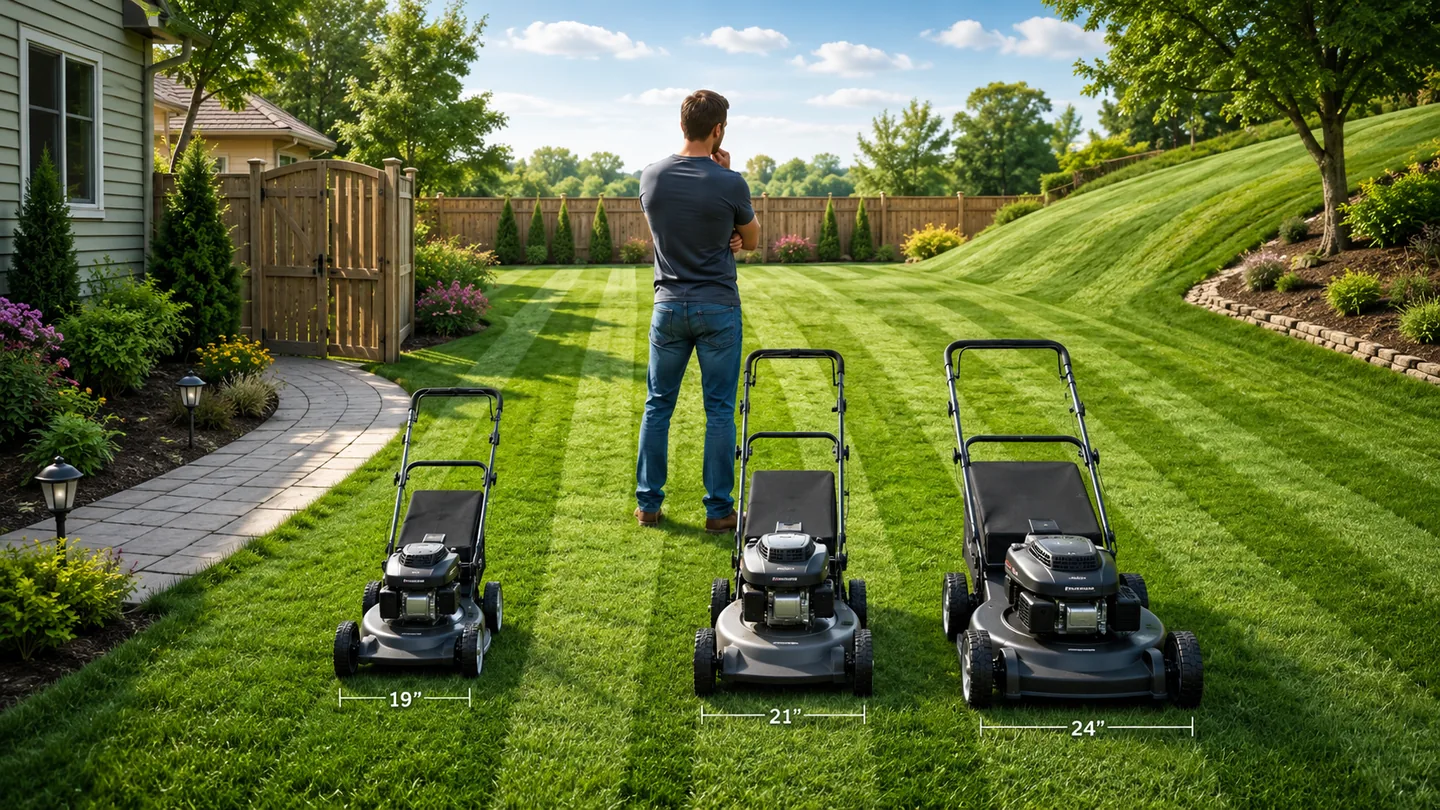
guide · Buying Guides
What Size Lawn Mower Do I Need? Measure the Lawn, Then Compare the Time
guide · Yard size
What Mower Do You Need for Half an Acre? Start With the Actual Grass
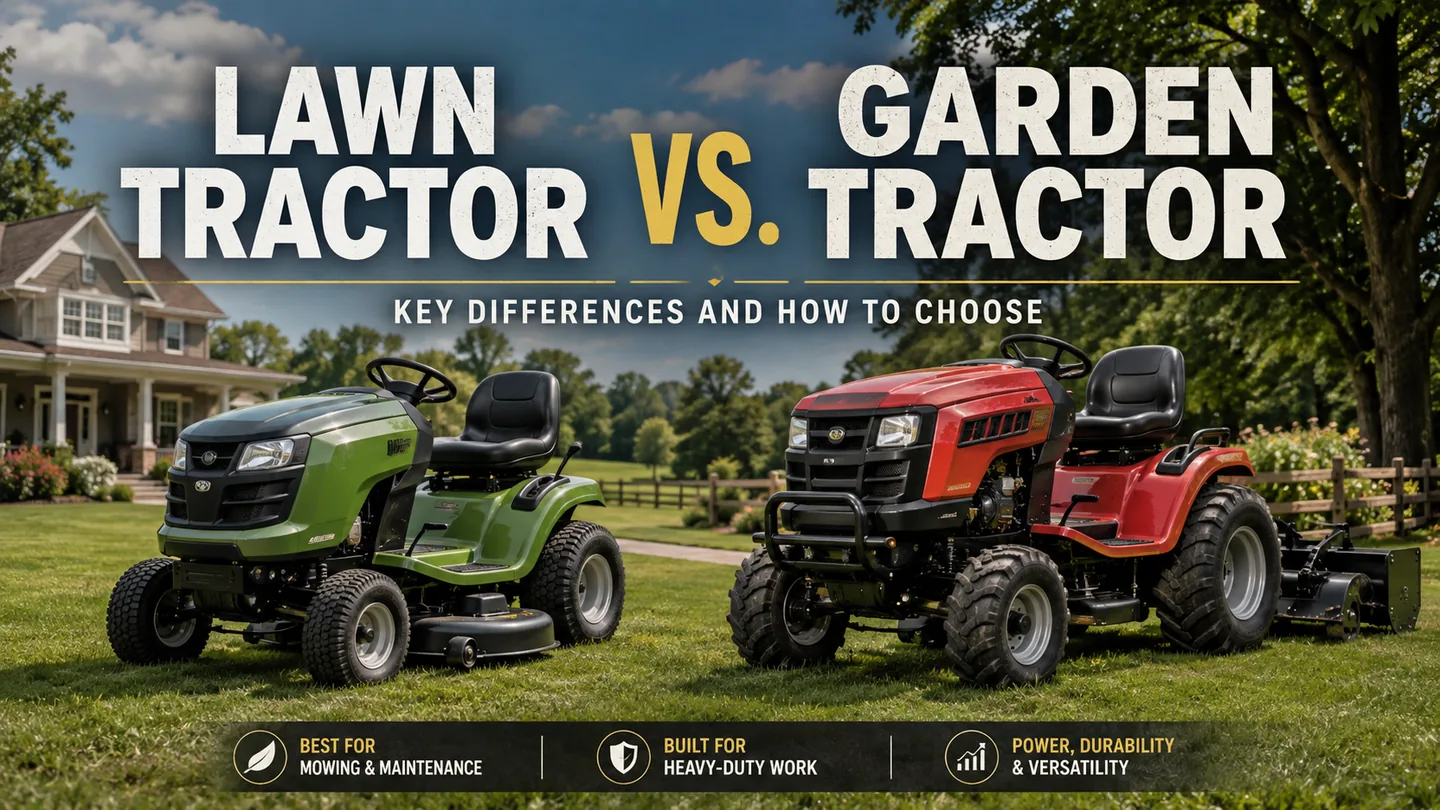
comparison · Buying Guides
Lawn Tractor vs. Garden Tractor: Which Do You Actually Need?
guide · Lawn conditions