Guide · Yard size
What Mower Do You Need for Half an Acre? Start With the Actual Grass
Compare a standard walk-behind, wide mower, and rider for a half-acre property using grass area, mowing effort, access, and battery requirements.
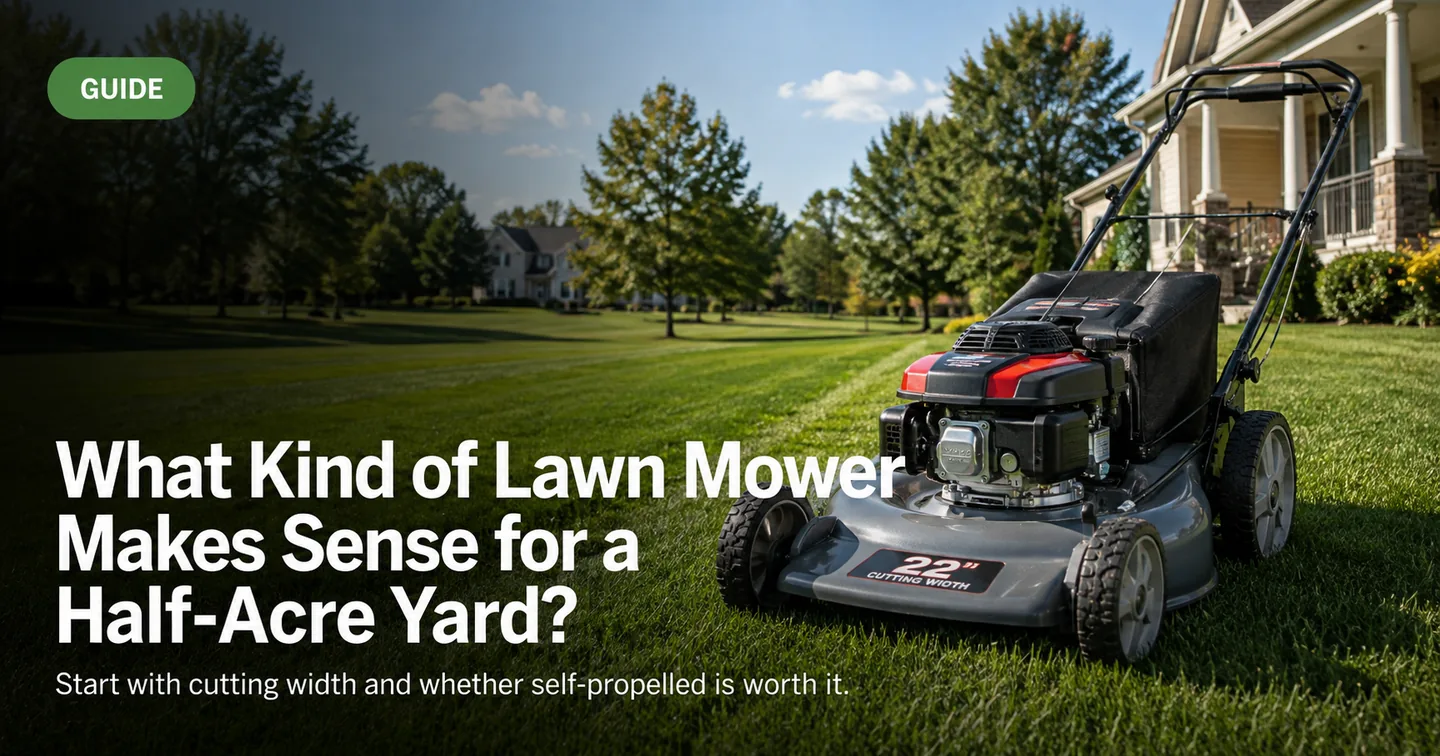
Half an acre can mean 21,780 square feet of grass. It can also mean a house, driveway, patio, garden beds, and a much smaller lawn squeezed around them.
Those are different mowing jobs. I wouldn’t buy the mower until I knew which one I had.
The Short Answer
For a half-acre property with a typical amount of landscaping and buildings, I’d start with a 20- to 22-inch walk-behind mower. Self-propelled drive is worth comparing if pushing a loaded mower is the tiring part.
For a full half acre of mostly open grass, I’d also price a wider walk-behind. A rider can make sense if walking, time, or mobility is the limiting factor, provided the terrain and access suit it.
You don’t need to earn the right to buy a rider by having a larger yard. You do need somewhere to use and store it.
A battery mower to put on the shortlist
Self-propelled battery option
EGO LM2156SP
EGO
Premium
The EGO LM2156SP is a 21-inch self-propelled example with a kit configuration that includes a 10Ah battery and 700W charger. EGO advertises up to 75 minutes with the specified battery. That is a manufacturer claim, not a verified result on a half-acre lawn. See EGO’s model and configuration details. I’d consider it if the cutting width fits the route, the controls feel comfortable, and the complete battery setup covers the work. I’d look elsewhere if a wider mower would save substantial time or the battery purchase only solves part of a long mowing session.
View product detailsFirst, decide whether you’re mowing half an acre
Add up the grass sections, rather than subtracting a guessed percentage from the lot size. Rectangles are length times width; triangles are half of base times height.
A half-acre lot with 10,000 square feet of lawn asks much less of a mower than a full 21,780 square feet of lawn.
That also explains why two owners can describe very different results with the same mower. “It does my half acre” leaves out the amount of grass, the battery, the cutting height, and how often the owner mows. This Reddit discussion about electric mowers on larger yards illustrates how many different properties get put in the same category.
Put a rough time against each option
Using the assumptions in our mower-size guide, a 21-inch mower at 2.5 mph takes about 35 minutes for 10,000 square feet and 75 minutes for a full half acre. A 30-inch mower at the same speed takes about 24 and 53 minutes, respectively.
These are modeled cutting-route times with 75% efficiency for ordinary turns and overlap. Add your own bag-emptying, setup, trimming, and charging time. Heavy growth and awkward landscaping can make the assumptions too optimistic.
On the smaller lawn, the wider mower saves about 11 minutes in that example. On the full half acre, it saves about 23. That is a more useful comparison than asking whether a particular acreage automatically requires a rider.
Buy self-propelled drive for the effort it removes
Try to separate “I’m tired of pushing” from “I’m tired of walking.”
Self-propelled drive can help with the first. You still follow the mower over the entire lawn. If that amount of walking is the problem, a more expensive walk-behind may not be the answer.
With the mower safely switched off, try the handle position and controls at a store or dealer. Ask for a demonstration of the drive if one is available. Think about turning around beds and pulling out of tight spaces, not just traveling down a straight aisle.
For slopes, check the exact manual before choosing a machine. More traction does not make every incline suitable, and mowing direction matters. Our sloped-yard guide covers that decision.
A battery mower needs a plan for the whole job
Write down the complete kit, including the battery model, capacity, quantity, and charger. Then add any compatible battery you already own that would actually be useful in that mower.
Don’t spend the same battery twice in your plan. If you intend to use it in the trimmer and blower after mowing, it needs enough energy left or time to recharge.
A mower that finishes an easy summer cut with almost nothing remaining has little margin for a tougher session. That doesn’t prove the battery is bad. It tells you the setup is close to its limit for that job.
For an existing mower, record three normal sessions: grass area completed, cutting time, battery used, and conditions. That is much more useful than trying to turn a battery gauge into an exact acreage rating. Our runtime guide explains how to use those notes before buying another pack.
When I’d consider a rider
I’d compare riding equipment if most of the half acre is open, the entire route is suitable for the machine, and reducing walking or cutting time is worth the extra purchase and ownership cost.
Before buying, check the gate, storage entrance, turns, bagging arrangement, and service plan. Ask what happens when the mower needs to go to a shop. Pickup and delivery can matter when the machine doesn’t fit in your vehicle.
If a fenced section still needs a walk-behind, count that second mowing job. The rider may still be worthwhile, but it won’t replace all the work.
What I’d choose for three different yards
| Yard | My starting choice | Why |
|---|---|---|
| Half-acre lot, roughly 9,000–11,000 sq. ft. of grass, several tight turns | Standard walk-behind | Access and maneuverability matter more than the lot label |
| Full half acre of open grass, comfortable walking, mowing takes too long | Compare a standard self-propelled mower with a wider walk-behind | Put a price against the minutes saved |
| Full half acre, suitable terrain and access, walking is the main problem | Compare riding equipment | Self-propelled drive won’t remove the walking |
The best purchase is the one that changes the part of mowing you dislike. Measure that part first.
Related guides
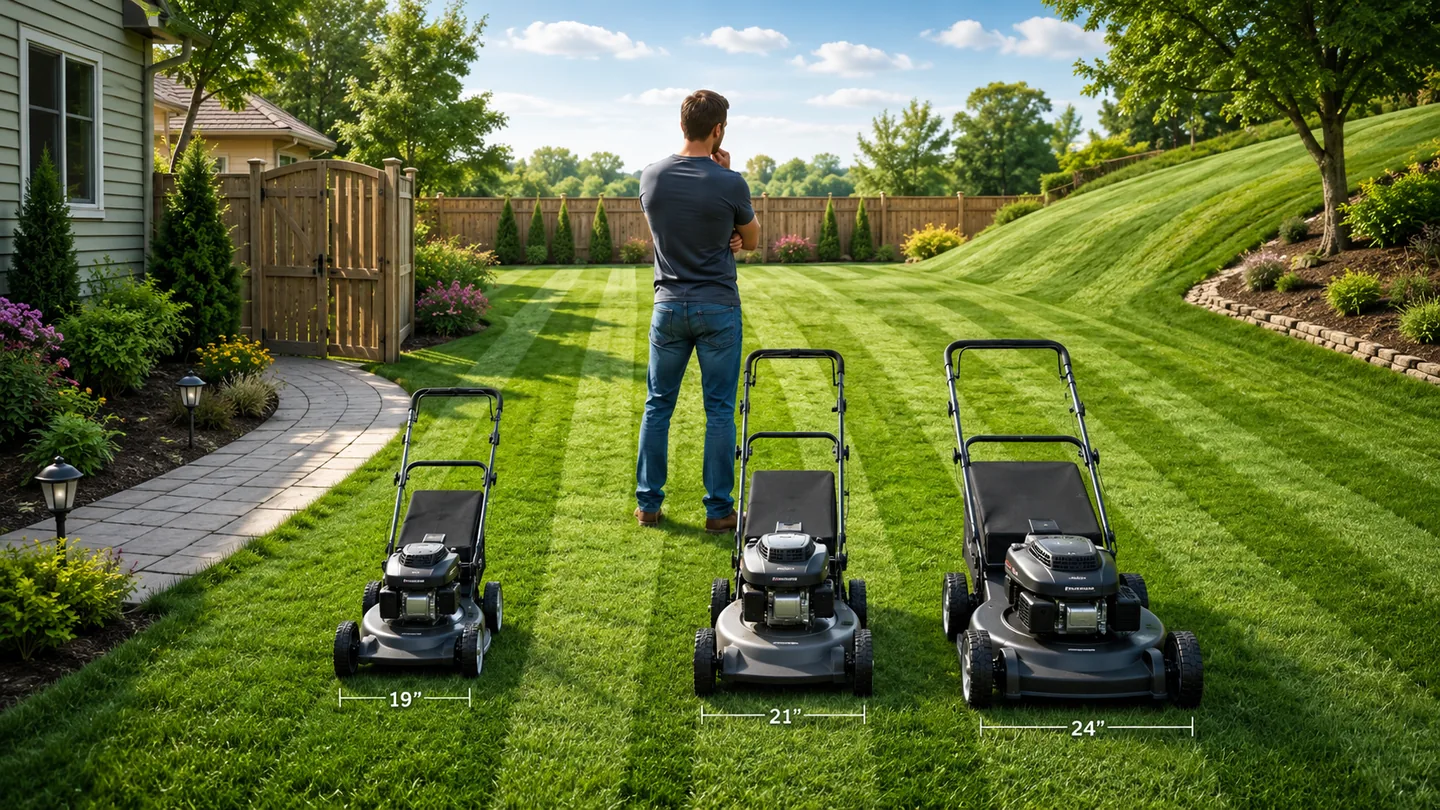
guide · Buying Guides
What Size Lawn Mower Do I Need? Measure the Lawn, Then Compare the Time
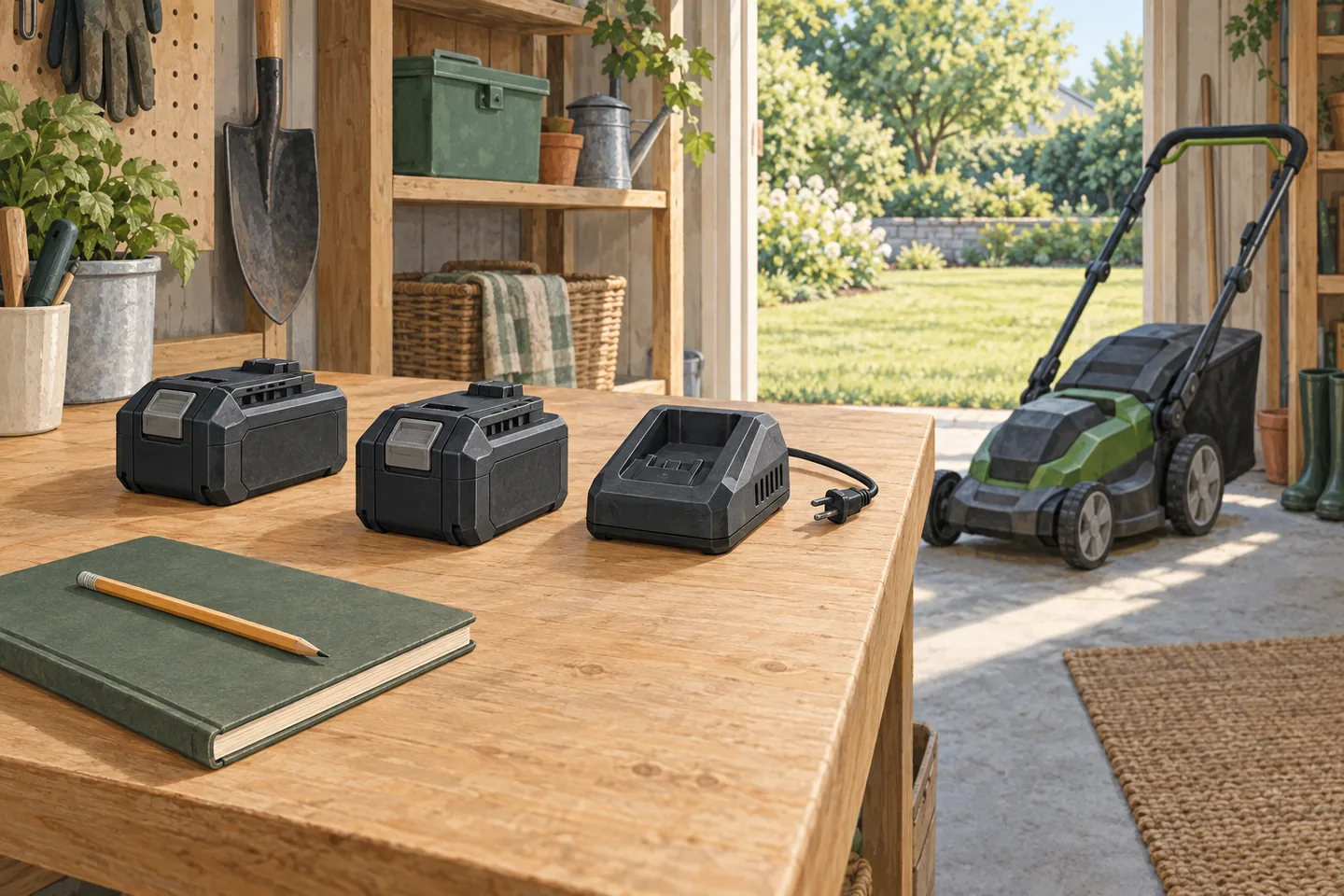
guide · Buying Guides
Battery Mower Won’t Finish the Yard? Check This Before Buying Another Battery
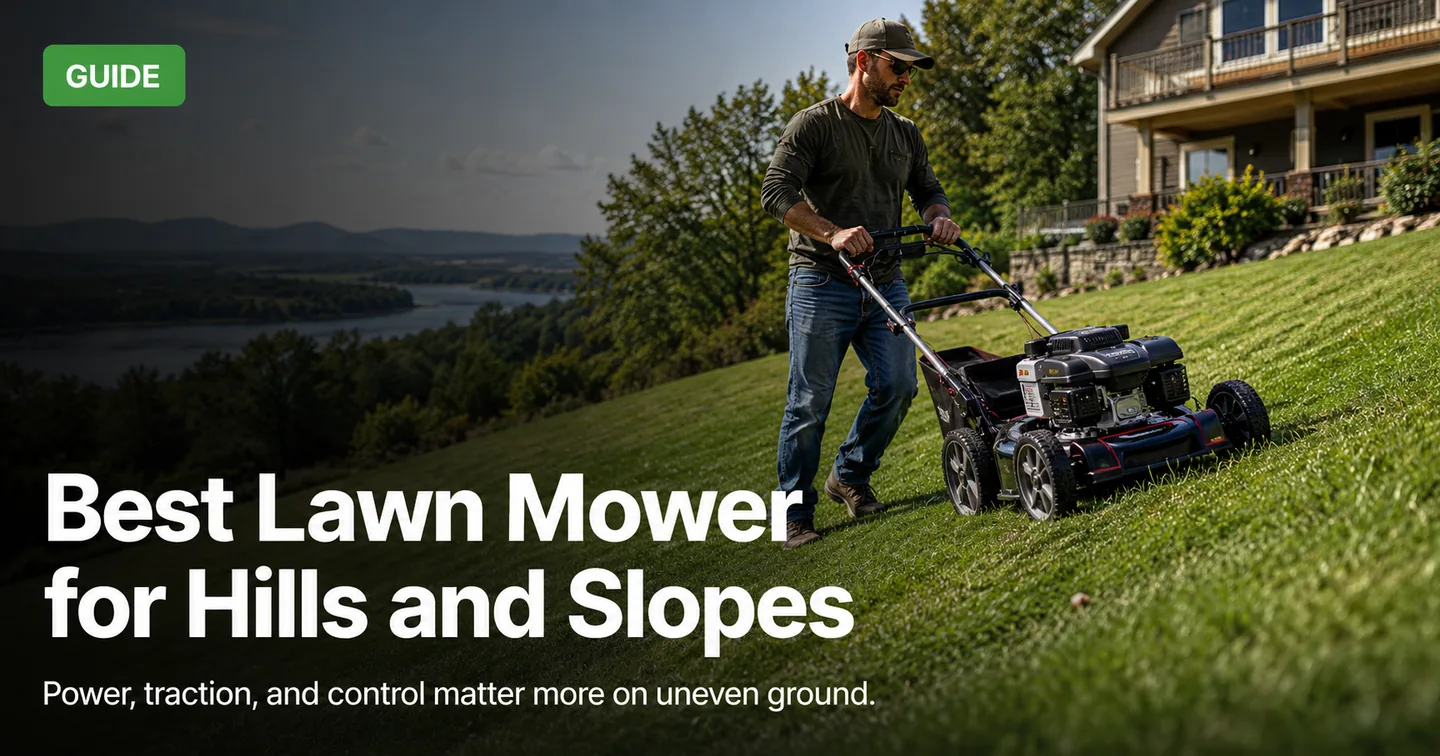
guide · Lawn conditions
How to Choose a Lawn Mower for a Sloped Yard
guide · Yard size
What Mower Makes Sense for One Acre? Compare the Time Before Buying
comparison · Comparisons