Comparison · Buying Guides
Lawn Tractor vs. Garden Tractor: Which Do You Actually Need?
A riding mower can be more than a way to cut grass, but that does not mean every property needs the heaviest tractor it can fit in the garage.
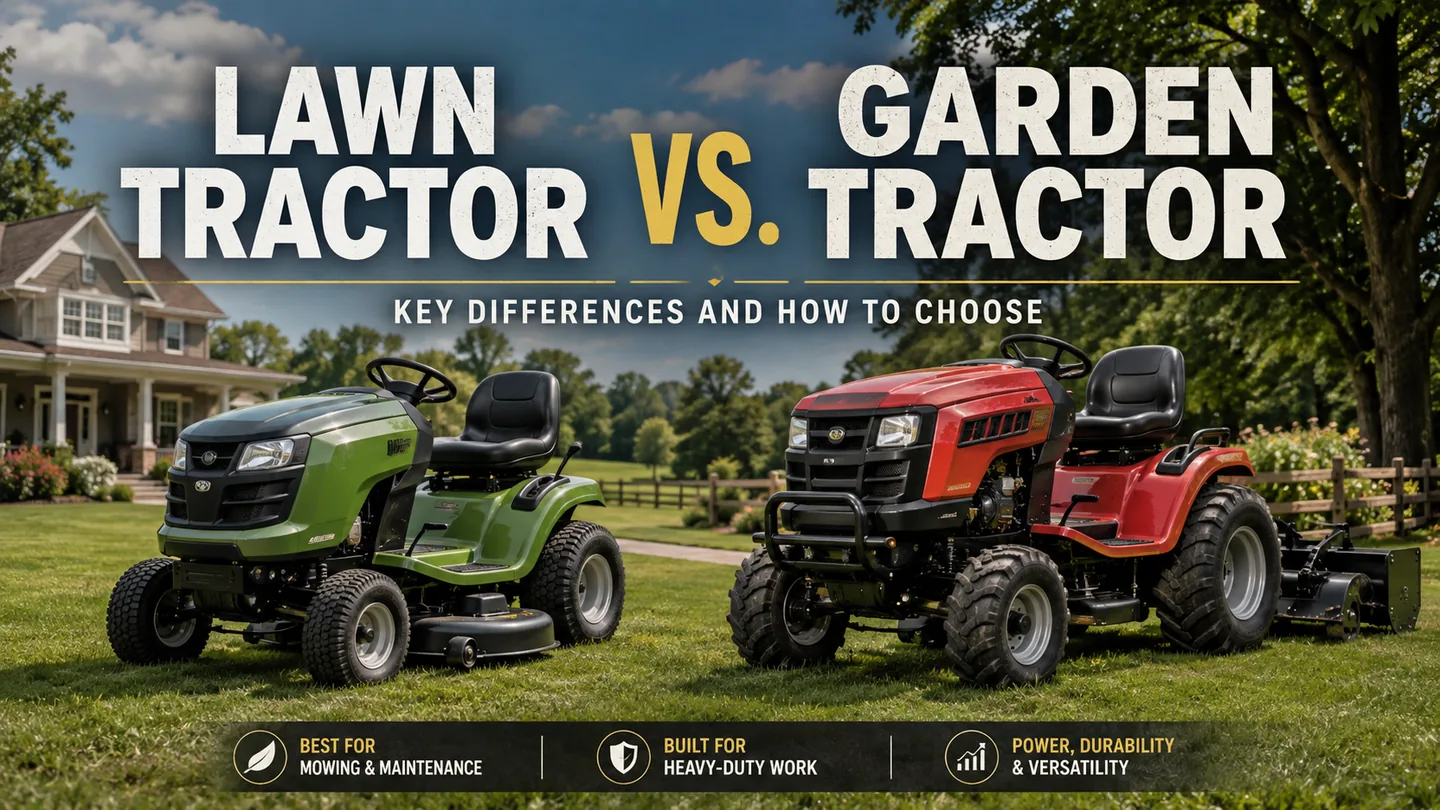
Comparison at a glance
| Machine type | Where it makes the most sense | What you give up |
|---|---|---|
| Lawn tractor | You primarily mow but want the option to bag, haul, spread, or use compatible seasonal attachments | It may not have the attachment capability or towing capacity you need for heavier property work |
| Garden tractor | Your property work regularly includes heavier compatible attachments or towing jobs, not just mowing | More machine means more cost, storage space, and maintenance than a mowing-first property may need |
| Zero-turn mower | You have open turf, many turns around landscaping, and want to spend less time mowing | It is built around mowing rather than serving as a general attachment platform |
Start with the work after mowing
If all you need is a faster way to cut grass, buying a garden tractor can be overkill. The extra capability only pays off when you will actually use it. The question is not whether a garden tractor can do more; it is whether your property gives it enough other work to justify the extra machine.
A lawn tractor can be a sensible middle ground. It handles mowing first, but compatible attachments can turn it into a useful property-maintenance tool for jobs such as bagging, hauling, spreading, dethatching, aerating, or seasonal work. In that sense, it can become landscaping on wheels. The exact attachment options depend on the model, so check the manufacturer information before assuming a particular job is supported.
Quick answer
I would buy a lawn tractor if mowing is the regular job and I wanted the option to pull a cart, bag clippings, or add a compatible attachment now and then. I would spend more on a garden tractor only if heavier compatible work or towing is already part of my normal routine. If I mostly want to cut grass quickly, especially around trees and landscaping, I would look at a zero-turn first.
What makes a lawn tractor different?
For a property where mowing is the regular job and the occasional cart or bagger would be helpful, I would start with a lawn tractor. It gives you more flexibility than a basic riding mower without automatically committing you to the size, cost, and storage needs of a heavier machine.
That sounds good on paper, but an attachment catalog is not a reason to buy a tractor by itself. If you will use a cart twice a year and never bag, spread, or do seasonal work, a mower focused on cutting grass may be the better choice.
Lawn tractor vs. garden tractor
A garden tractor is worth the extra attention when compatible attachments or towing are part of your normal property routine. Think about the chores you do every season, not the one project you hope to tackle someday.
This is probably overkill for a lawn that needs mowing and light cleanup. It makes more sense for an owner who has a regular reason to use a heavier attachment setup and has room to store and maintain it.
Where zero-turn mowers fit
A zero-turn is the mowing-first alternative. It earns its place on open turf, around a lot of landscaping, or anywhere turning time is a real part of the job. If your goal is to finish mowing faster, I would compare zero-turns before I bought a garden tractor just for the sake of owning more machine.
The tradeoff is straightforward: a zero-turn is designed around mowing, while a tractor can make more sense as a general property tool. Pick the job you do most often.
Deck width: match it to the property, not the acreage label
Deck width should follow the grass you actually mow. A wide deck can save time on an open lawn, but it can be annoying around trees, beds, narrow gates, and tight storage. Before shopping, measure the narrowest gate and the storage opening. Then think about how much of the property is uninterrupted turf versus stop-and-turn mowing.
On a one-acre property with broad open grass, moving to a riding mower category can make sense. On an acre broken up by landscaping and paths, the extra width may not save as much time as you expect. Our one-acre mower guide walks through that decision in more detail.
Transmission considerations
The transmission question is really about how the tractor feels while you work. A mowing route with lots of turns, starts, stops, and reversing calls for easy control. If you will pull compatible equipment or spend more time doing property chores than simply mowing straight lines, the transmission deserves as much attention as the deck.
Do not assume one transmission type means a tractor can handle every attachment or towing job. Look at the operator’s manual and the current manufacturer guidance for the exact model and task.
Attachment ecosystem
This is where a lawn tractor earns its keep. A bagger, cart, spreader, dethatcher, aerator, or seasonal attachment can save you from buying several separate machines—if the tools are actually compatible and you will use them.
That last part matters. An attachment ecosystem is useful when it replaces work you already do. It is not a reason to buy a tractor because you might find a use for it later. Check the current manufacturer list for compatible baggers, mulch kits, carts, snow equipment, and other attachments before treating them as part of the deal.
Mulching versus bagging
Mulching makes sense when you mow often enough to avoid leaving heavy clumps and your lawn conditions support it. Bagging is more useful when the grass is overgrown, leaves are part of the cleanup, or you simply want a cleaner finish. A bagging setup adds equipment and emptying time, so do not assume it is an upgrade for every mowing routine.
The important part is making sure the mower and any bagging equipment are compatible. Check the specific manufacturer information instead of assuming an attachment works across a whole brand or tractor line.
Slopes need model-specific guidance
Do not choose a riding mower based on a universal slope number from a forum or a neighbor. Check the operating guidance for the exact machine you are considering. The slope, grass condition, surface, obstacles, and machine all affect what is safe. Wet grass is a different job from dry grass, and a slope that feels manageable on foot may still be a poor place for a riding mower.
If slopes are a major part of the property, our guide to mower choices for a sloped yard is a useful place to start.
Recommendations by property and use case
Mowing is the job, with a few chores on the side
Buy a lawn tractor. It gives you the most useful middle ground for bagging, hauling, and compatible seasonal work without turning a simple mowing purchase into a larger equipment commitment.
Heavier compatible work is already part of the routine
Buy a garden tractor. If towing or attachment work is real and recurring, paying for a more capable platform makes more sense than asking a mowing-first machine to do work it was not built to handle.
You want to finish mowing faster
Buy a zero-turn. It is the better fit when mowing efficiency and maneuvering around landscaping matter more than a broader attachment system.
Final practical takeaway
Buy the lawn tractor if you mostly mow and want some useful flexibility. Buy the garden tractor if the heavier compatible work is real and recurring. Buy the zero-turn if the priority is cutting grass efficiently and getting on with the rest of your weekend.
Frequently asked questions
Can a lawn tractor do more than mow?
Many lawn tractors can accept compatible bagging, hauling, spreading, dethatching, aerating, or seasonal attachments. The exact options and operating limits depend on the specific model and manufacturer guidance.
Do I need a garden tractor for one acre?
Acreage alone does not decide it. A garden tractor makes more sense when heavier attachment work or towing is part of the regular job. For mowing-focused properties, a lawn tractor or zero-turn may be the better use of space and money.
Is a zero-turn better than a lawn tractor?
It is better at a different job. A zero-turn usually makes sense for mowing efficiency and maneuverability. A lawn tractor can make more sense if you value compatible attachments and general property chores.
Can I use a riding mower on a slope?
Check the specific manufacturer’s operating guidance before using any riding mower on a slope. Conditions such as wet grass, obstacles, surface changes, and the exact machine all affect safe operation.
Related guides
guide · Yard size
What Mower Makes Sense for One Acre? Compare the Time Before Buying
guide · Yard size
What Mower Do You Need for Half an Acre? Start With the Actual Grass
guide · Lawn conditions