Comparison · Comparisons
EGO vs. RYOBI String Trimmers: ST1623T and RY402110 Compared
Compare the EGO ST1623T and RYOBI RY402110 kits by line loading, battery size, published weight, attachments and ownership costs.
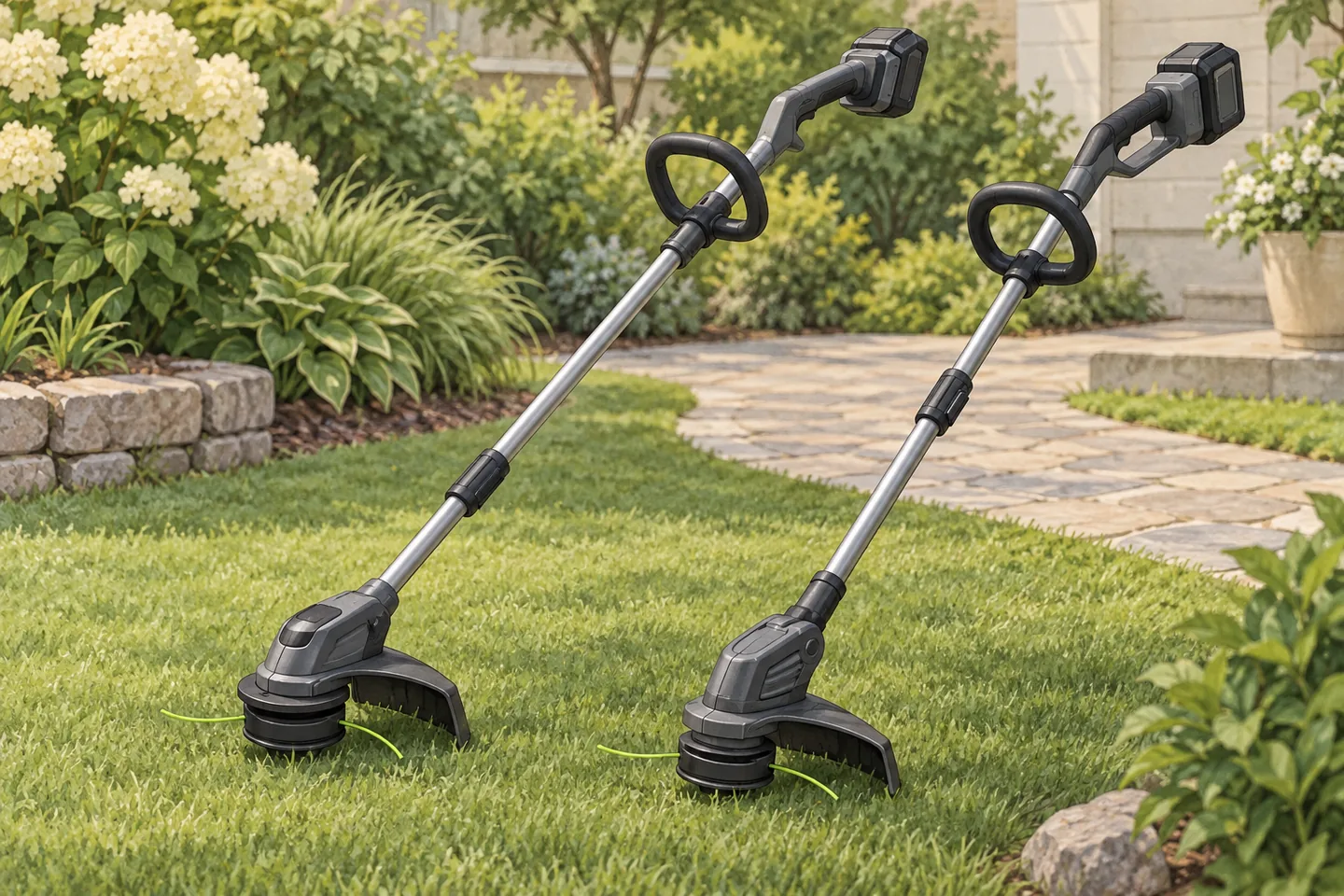
AI-generated illustration: compare the complete trimmer setup, including the battery and cutting head.
“EGO versus RYOBI” is too broad to settle a trimmer purchase. Both brands sell different tools for different jobs, and a kit’s battery can change the price and handling. A useful comparison needs model numbers.
This guide compares the EGO ST1623T with the RYOBI RY402110. They are documented cordless kits with different approaches to line feeding. This is not a claim that either represents every trimmer its brand sells, or that these are both brands’ newest models.
The Short Answer
I would favor the EGO ST1623T when automatic line feeding and powered line loading solve a frustration you already have. I would compare the RYOBI RY402110 when you prefer bump feeding, want its adjustable cutting width, or already have useful RYOBI 40V equipment.
If you mainly want a powerhead for an edger and other attachments, step outside this particular pair and shop an explicitly attachment-capable model. Battery compatibility does not turn a dedicated trimmer into an interchangeable-attachment system.
The exact kits
| Detail | EGO ST1623T | RYOBI RY402110 |
|---|---|---|
| Battery in the documented kit | 56V 4Ah | 40V 6Ah |
| Cutting width | 16 inches | Adjustable 15–17 inches |
| Normal line feed | LINE IQ automatic feed | REEL EASY+ bump-feed head |
| Loading approach | POWERLOAD winds inserted line | Easy-loading head uses manual winding through its mechanism |
| Shaft | Telescopic carbon fiber | Carbon fiber |
| Decision to investigate | Whether automatic feed is worth the purchase | Whether the controls and complete 6Ah setup suit you |
Sources: EGO ST1623T and RYOBI RY402110. Check the selected offer because bare tools and different bundles can appear beside these kits.
A 6Ah battery on one voltage platform should not automatically be described as fifty percent more runtime than a 4Ah battery on another. Voltage, energy, operating load and the tool all matter. Our voltage and battery-capacity guide explains the numbers.
Automatic feeding versus bump feeding
EGO’s two named features handle different jobs. POWERLOAD helps load a fresh length of line. LINE IQ manages feeding as you trim. Buying one feature is not the same as buying the other, which is why exact model names matter even within EGO’s range.
I would pay more attention to those features if line handling is what regularly interrupts your work. If your current bump-feed head rarely bothers you, automation may be a convenience you do not need to pay extra for.
The RYOBI offers a more familiar bump-feed approach. Pro Tool Reviews described the RY402110’s easy-loading head and confirmed that the reviewed model was not attachment-capable. A joint in the shaft should not be mistaken for an attachment promise. RY402110 firsthand review.
Replacement-head availability is worth checking for either trimmer before purchase. You want the correct parts for the exact model, not a generic head selected because it looks similar.
How heavy are the complete setups?
TechGearLab reports a measured 12.8-pound weight for the EGO ST1623T setup in its review. Pro Tool Reviews lists the RYOBI at 12.9 pounds with its 6Ah battery. These come from different reviewers and are not controlled measurements made on the same scale. They should not be used to crown a winner by one tenth of a pound. EGO test details, RYOBI review.
The useful takeaway is that neither complete kit should be assumed featherweight because its shaft is carbon fiber. Handle position, shaft adjustment and where the battery sits affect comfort as well as total weight.
If possible, handle the assembled tool with its intended battery, powered off. For a long fence line, pay attention to balance in a normal working position. A display without a battery does not give you the same information.
What the published tests can tell you
The independent reviews provide useful observations about handling and operation. They do not establish identical runtime conditions across the two models. A no-load test, a continuous-trigger test and trimming around mixed obstacles are different tasks.
I would not convert those separate results into a precise “minutes per yard” comparison. Instead, record how long your current route takes and how much of that time is actual trimming. Then investigate whether the kit and any spare batteries are enough for that workload.
Read our full ST1623T review if the automatic-feed system is the main reason you are considering EGO.
Existing batteries can settle the price question
RYOBI 18V ONE+ and RYOBI 40V are separate systems. Owning green drills is not enough to conclude that their batteries power this 40V trimmer. RYOBI lists the two platforms separately in its battery and charger range.
Compare the price of the complete kit against a bare tool plus anything you still need. Then price the second battery you would actually carry or use. A bargain that adds another charger and leaves you short of runtime may not save much.
Starting from scratch, I would include the next likely purchase—usually a mower or blower—in the comparison. Do not buy a whole ecosystem for a tiny difference between two trimmers. Our battery-system guide walks through that decision.
What I would choose
For an existing EGO owner frustrated by line handling, the ST1623T would be high on my list. For an existing RYOBI 40V owner happy with bump feeding, I would compare the RY402110 and current alternatives before switching systems.
For a small amount of weekly grass, both may be more package than you need. For a long trimming route, comfort and spare capacity deserve more attention than the logo. If edging is the actual problem, read string trimmer versus edger before choosing either.
Research checked September 7, 2026. This is a researched buying guide, not our own hands-on test.
Related guides

guide · String trimmers
How to Choose a String Trimmer for a Large Yard
comparison · Comparisons