Comparison · Seasonal cleanup
Leaf Blower vs. Lawn Sweeper: Which Part of Cleanup Is Taking Too Long?
Choose between a leaf blower, push sweeper, and tow-behind sweeper by the pickup route, disposal point, access, and time spent emptying.
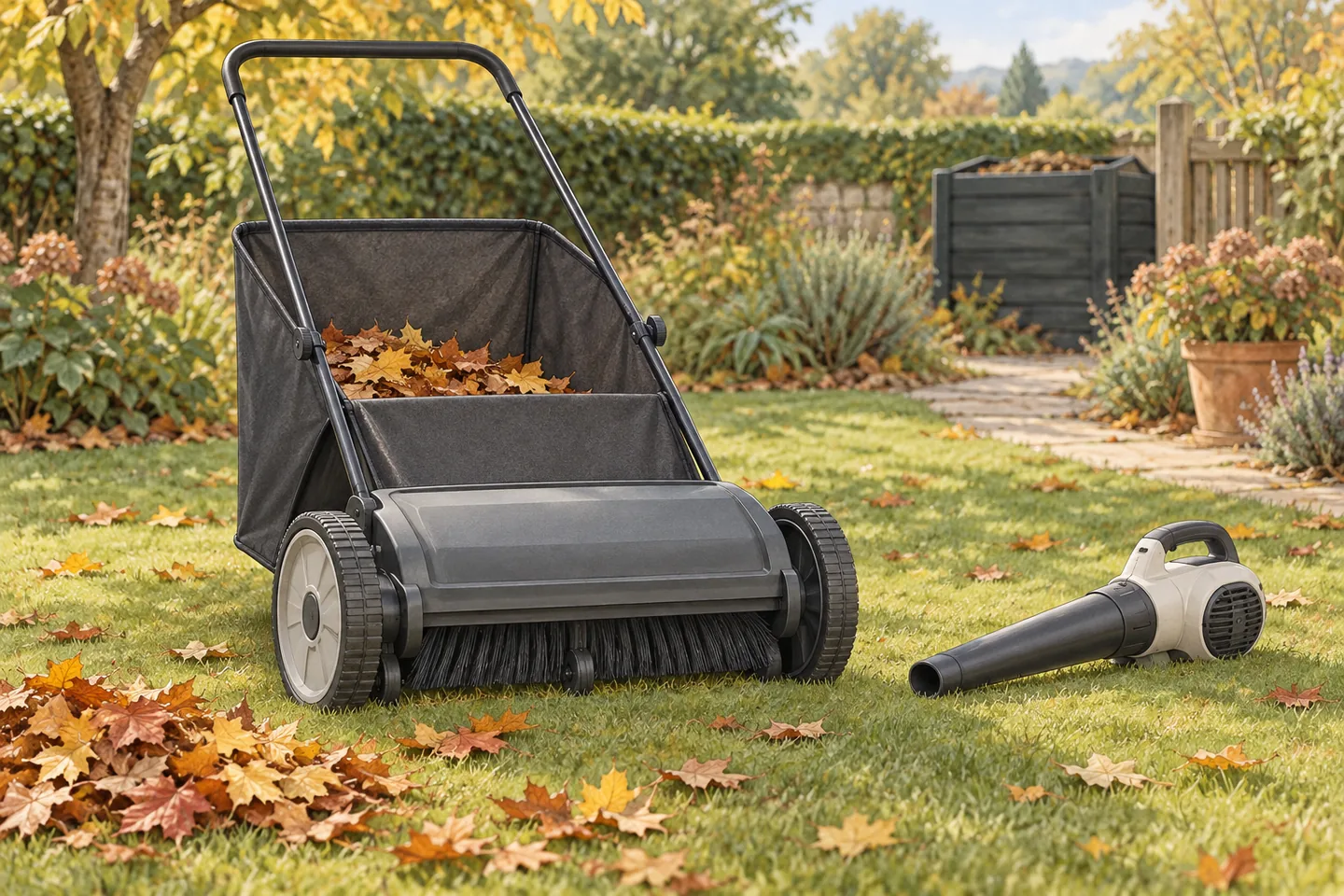
AI-generated illustration: a blower moves leaves; a sweeper collects them into a hopper.
If you spend an hour blowing leaves into a pile and another hour collecting them, a bigger blower only improves part of the afternoon.
A lawn sweeper is worth considering when collecting leaves from open turf is the part you want to change. It still needs somewhere to empty them.
The Short Answer
Use a blower or rake to move leaves out of corners, along fences, and across suitable hard surfaces. Compare a sweeper when you have open lawn and recurring material to collect.
A push sweeper can work without a riding mower. A tow-behind sweeper requires a suitable towing machine, compatible hitch, enough turning room, and storage for both.
If most leaves can be mulched into the lawn, you may need less collection equipment than you think. Start with the test in our heavy-leaf cleanup guide.
Match the tool to the slow part
| Your main problem | What I’d compare first | What remains to do |
|---|---|---|
| Leaves caught along a fence or around steps | Blower or rake | Collect or redistribute the leaves appropriately |
| Leaves spread across broad open turf | Sweeper, mower bagger, or mulching | Empty the collector if using one |
| Small lawn and little storage | Existing rake, tarp, or mower setup | More manual handling may be acceptable |
| Large repeat collection job and a suitable rider already owned | Compatible tow-behind sweeper | Check access, towing limits, and dumping route |
| Wet mats pressed into grass | Raking or waiting for better conditions | Reassess powered pickup once the material is manageable |
These are use-case judgments. We have not timed these tools against each other on a test lawn.
Push and tow-behind sweepers are different purchases
With a push sweeper, you supply the movement and walk the route. Check how the unit turns in your available space and how you remove or tip the hopper.
With a tow-behind, the towing machine becomes part of the decision. Check both manuals for compatibility, operating limits, and any slope restrictions. A sweeper behind a mower needs more space to turn than the mower alone.
Then walk the dumping route. If the compost area is through a narrow gate, up an unsuitable incline, or beyond a tight turn, the sweeper may collect leaves efficiently and still be awkward to empty.
Brush height can matter more than hopper size
A sweeper needs its brushes positioned correctly for the lawn. Buying a larger hopper will not fix a poor setup.
As a specific example, Agri-Fab’s instructions for its 26-inch push sweeper call for the brushes to reach approximately half an inch into the grass and for the lawn to be mown to an even height before sweeping.
Use your model’s instructions. Try a short section, stop, and inspect the result before repeating the same ineffective setting across the entire yard.
If pickup remains poor after the correct adjustment, consider the material and the surface. A matted patch may need raking. Tight beds may need another tool. The mower or sweeper does not have to do every part of the property.
Time the emptying trips
Here’s a made-up cleanup comparison:
| Task | Time |
|---|---|
| Gathering leaves | 35 minutes |
| Picking up the piles | 30 minutes |
| Walking loads to the disposal point | 25 minutes |
| Total | 90 minutes |
Even halving the gathering time only saves about 18 minutes. Moving the disposal container closer, where practical, could address a different bottleneck. A sweeper might combine gathering and collection, but only if it can travel the route and empty conveniently.
Record one session before buying equipment. Count the loads and the emptying trips. That gives you something more useful than comparing airflow numbers with hopper capacity.
When I’d keep the equipment I already have
I’d keep a rake, blower, and tarp if the collection season is short, the yard is awkward, and the current routine is manageable. I’d price a sweeper if the same large pickup job keeps returning and open turf gives it room to work.
Don’t store the sweeper with the last load still inside. The Agri-Fab manual above specifically warns against leaving damp grass or leaves in the hopper for extended periods.
The purchase should reduce the work between the first leaf and the last emptied load. That is the part worth comparing.
Related guides
guide · Seasonal cleanup
How to Deal With a Yard Full of Leaves: Mulch, Collect, or Both?

guide · Leaf blowers