Guide · Seasonal cleanup
How to Deal With a Yard Full of Leaves: Mulch, Collect, or Both?
Use a small test area to decide how many leaves your lawn can take, then build a practical cleanup route for dry leaves, wet mats, and excess piles.
A blower can move a lot of leaves quickly. That doesn’t help much if you finish with a giant pile and no way to get rid of it.
Before starting, decide which leaves can stay, which need collecting, and where the collected leaves will go. Different parts of the yard can need different answers.
The Short Answer
Mulch a manageable layer into the lawn when conditions are dry and the chopped pieces can settle between the grass. Collect the excess when mulching leaves a blanket on top. Use a rake, blower, or sweeper to suit the area, then move the leaves directly toward their destination.
For a heavy leaf drop, I’d usually expect to do some mulching and some collecting. There is no reason the whole property has to use one method.
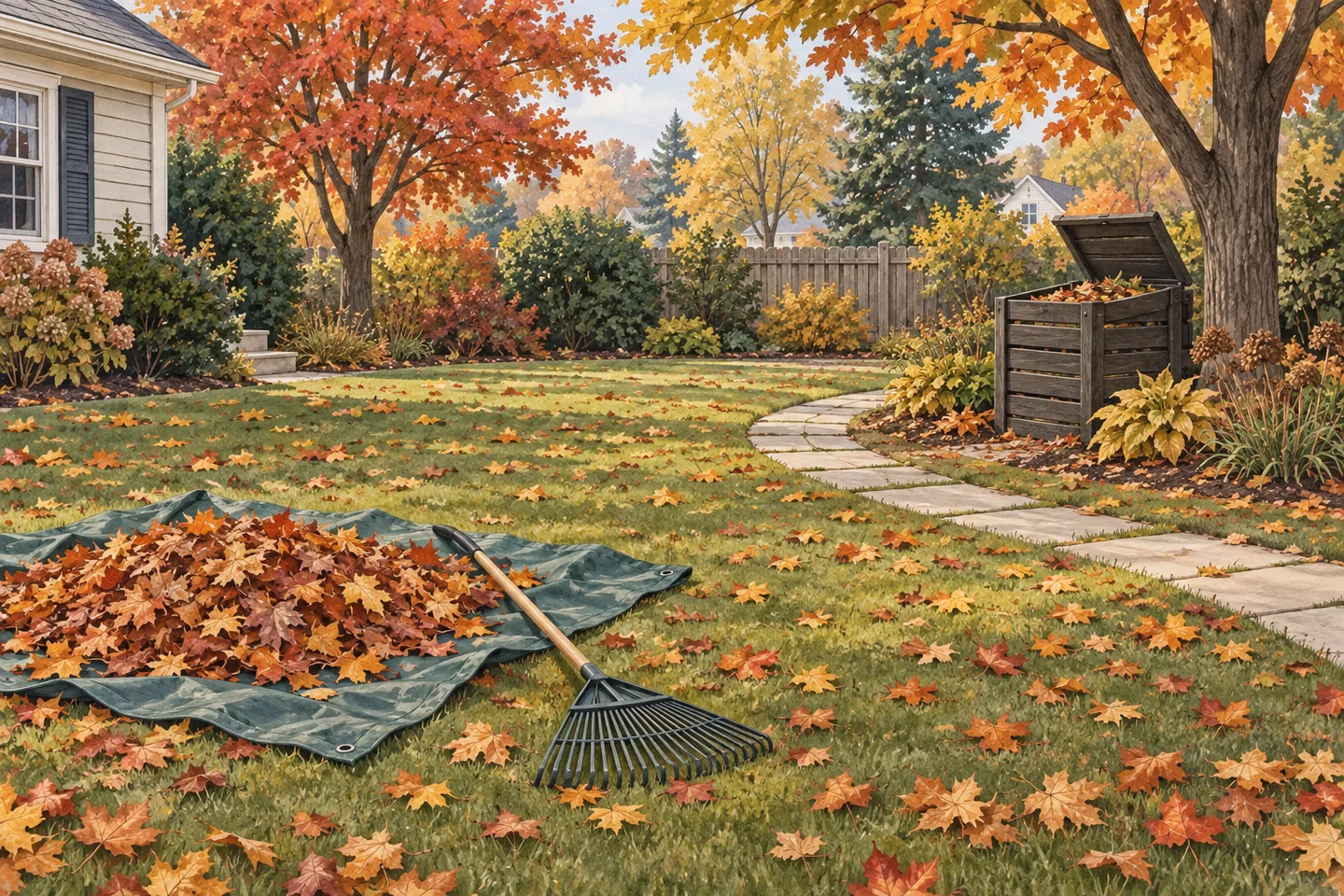
Try a small section before doing the whole lawn
Choose a representative patch, including an area where the leaves are heavier. Remove sticks and hidden debris first. Use the mower’s approved mulching setup and follow its instructions.
After the mower has stopped, look closely at the result. Are small pieces settling into the grass, or have you created a chopped-up layer that still covers it?
University of Connecticut’s leaf-management guidance recommends no more than 20% surface coverage by leaves after mulching. That is a useful, conservative reference for this check—not a claim that you need to measure every square foot exactly.
If you can mostly see grass and the fragments are dispersed, continue. If the grass is still buried, collect some of the material. Another pass may reduce large pieces, but repeatedly driving over a dense layer does not make the excess volume disappear.
Pick a method for each area
| What you find | Where I’d start | What tells me to change course |
|---|---|---|
| Dry leaves scattered through open turf | Test mulching in place | Too much residue remains over the grass |
| Thick deposits under a few trees | Remove part of the volume, then assess the remainder | The mower clumps or struggles, or turf remains covered |
| Wet, matted leaves | Rake and collect manageable amounts; wait for suitable conditions before mowing | Poor footing or leaves stuck in a solid layer |
| Leaves around fences, steps, and corners | Rake or blow toward a nearby collection point | Repeated blowing sends them back across the same ground |
| Broad open turf with leaves to remove | Compare mower bagging, a sweeper, or gathering onto a tarp | Collection and emptying take longer than the actual pickup |
| Leaves in an appropriate planting bed | Consider leaving them in place | Plant needs, access, or a known pest or disease issue requires removal |
This is a suggested work sequence, not comparative equipment test data.
Give every pile a destination
Choose the destination before making piles: on-site composting, suitable planting beds, or your local yard-waste service.
If using pickup, check the current rules for containers, loose piles, placement, and collection dates. Keep drains and traveled surfaces clear. There is little value in bagging everything if the service only accepts a different container.
If moving leaves on a tarp, work in loads you can control. A smaller load that reaches the compost area is more useful than a huge one you can’t drag or lift.
For on-site composting, choose a location you can actually reach throughout the cleanup. A bin at the far end of the property changes the amount of hauling. Virginia Cooperative Extension describes composting and mulching as alternatives to removing leaves from the property.
A practical route for a large cleanup
I’d divide the yard into three or four sections and finish one at a time.
First clear the access paths and remove sticks. Next, work the edges of that section toward a nearby collection point. Test whether the open turf can be mulched. Collect the material that cannot stay, empty the container, and then move to the next section.
For example, imagine a lawn with a patio at one end and a compost area at the other. Clear the patio into a manageable collection point. Work across the lawn toward the compost area, rather than moving every leaf onto the patio and hauling it back through the yard.
Wind can change the route. If it keeps undoing the work, pause or choose a sheltered section instead of fighting the same pile for an hour.
When a mower bagger helps
A mower with an approved bagging setup can cut and collect leaves in one route. The question is how often you have to stop and where you empty it.
Try one section and count the trips. If every bag requires a long walk, move the collection container closer where practical. If the material is too heavy or wet for clean collection, change the method or wait for it to dry.
Do not remove shields or improvise a bagging arrangement. The machine needs the configuration specified by its manufacturer.
When a sweeper is worth comparing
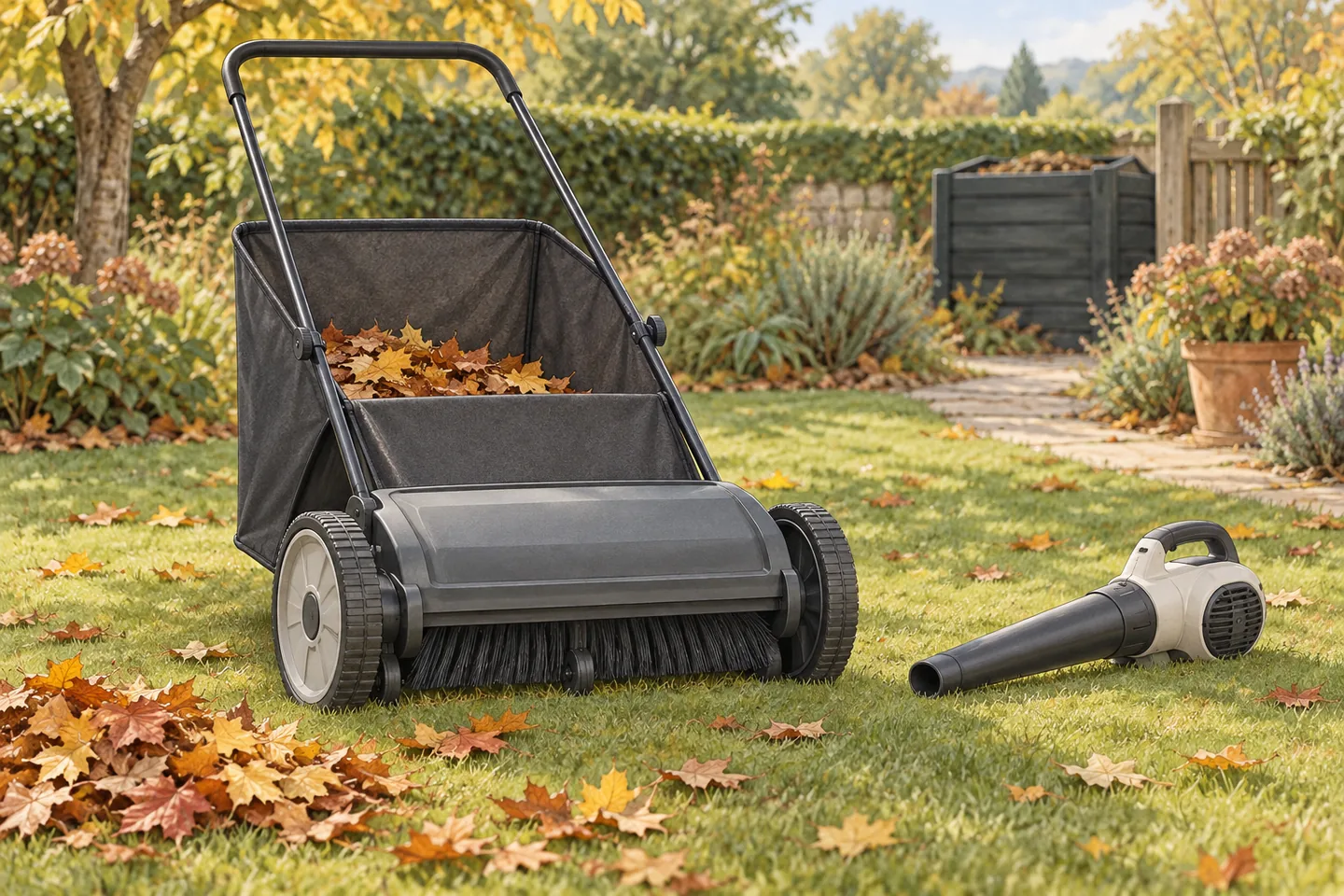
A sweeper becomes interesting when you have open turf, recurring leaves to collect, and a practical place to empty the hopper. A push model and a tow-behind model have different access and storage requirements.
Brush adjustment matters. For example, Agri-Fab’s 26-inch sweeper manual specifies setting its brushes about half an inch into the grass. That is an instruction for that model, not a universal setting for all sweepers.
Before buying a larger collector, compare the whole route: pickup, turns, emptying, and storage. Our blower-versus-sweeper guide goes through that choice.
Don’t wait for every last leaf
Smaller recurring cleanups can avoid the solid mat that makes the last cleanup miserable. Start with the areas that accumulate the deepest layer, then adjust the schedule to the actual leaf drop.
You also don’t need to remove every leaf from every planting bed. UConn’s guidance above discusses leaving intact leaves in suitable beds as habitat for beneficial insects. Lawn, beds, paths, and drains have different needs.
Pine needles deserve a separate plan. Virginia Cooperative Extension notes that they resist breakdown and are better considered for uses such as landscape mulch than treated like broad leaves to be mown into turf.
Know when you’re finished
The lawn should have enough exposed grass after mulching. Paths and drains should be clear. Collected material should be at its destination, and equipment should be emptied and stored according to its instructions.
A larger leaf blower may help move the leaves. A better route helps finish the job.
Related guides
comparison · Seasonal cleanup
Leaf Blower vs. Lawn Sweeper: Which Part of Cleanup Is Taking Too Long?

guide · Leaf blowers