Comparison · Chainsaws and pole saws
Chainsaw vs Pole Saw: Which One Do You Need?
A chainsaw and a pole saw overlap less than people think. The useful choice comes down to where the cut is, what is under the branch, and whether you can keep both feet planted while you work.
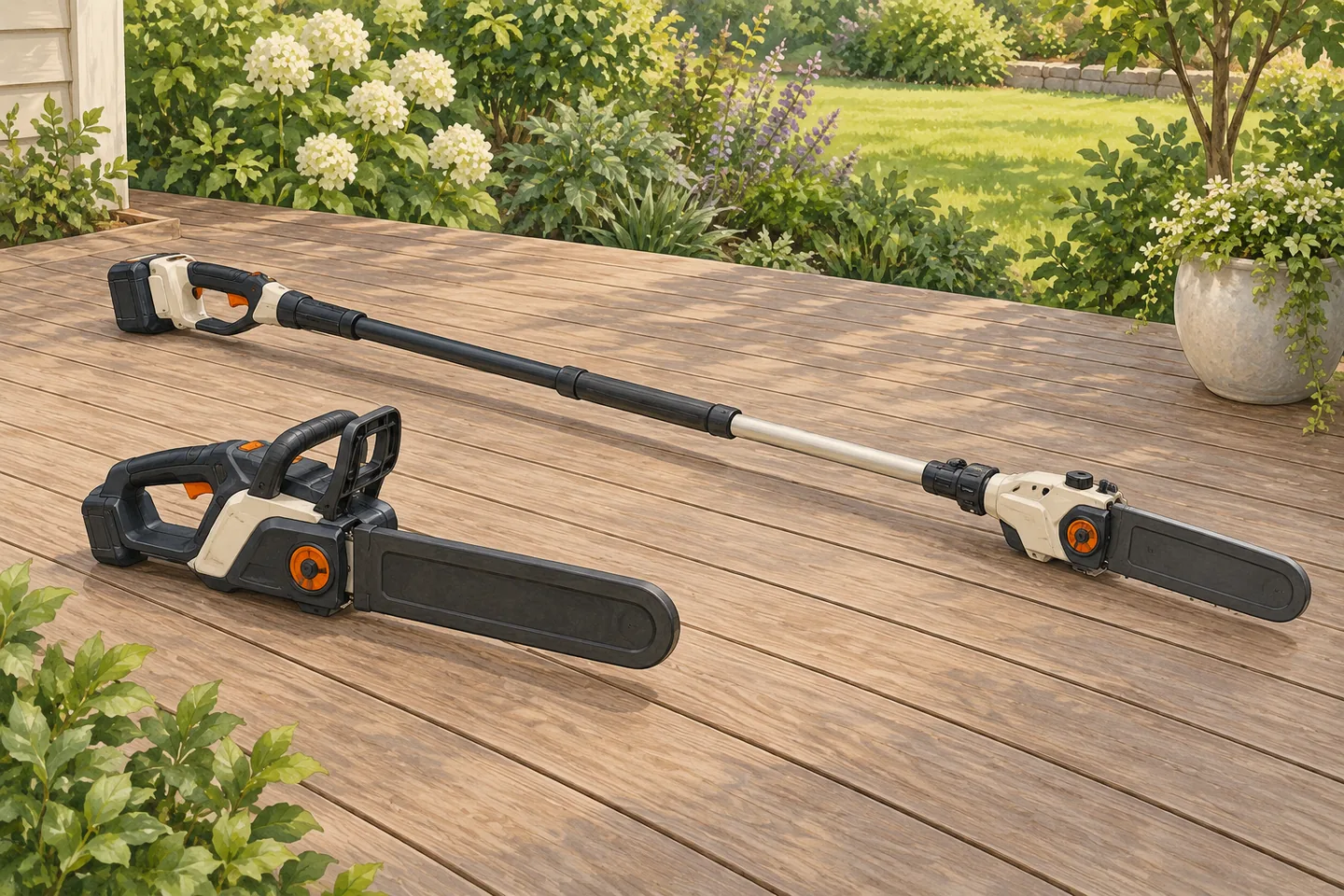
AI-generated illustration: a chainsaw and a pole saw serve different reach requirements.
Comparison at a glance
| Question | Chainsaw | Pole saw |
|---|---|---|
| Where is the cut? | Best suited to work you can reach from a stable position at ground level | Built to reach smaller branches while the operator stays on the ground |
| What kind of job is it? | Fallen limbs, bucking material on the ground, and cuts within the tool's intended use | Pruning and removing reachable limbs above normal standing height |
| Main concern | Cutting control, kickback awareness, and keeping clear of the cut path | Tool balance, falling-branch path, and avoiding work near hazards above or around you |
The cut tells you which tool to reach for
If the branch is on the ground and you can work from a stable position, a chainsaw is the tool category to consider. If the branch is still in the tree but small enough to be handled from the ground, a pole saw may be the better fit.
That sounds simple, but it keeps people from making a common mistake: using a chainsaw for a reach problem. A chainsaw does not become a pruning tool because the branch is only a little too high. If your feet need to leave the ground to make the cut, stop and rethink the job.
Chainsaw: better for material on the ground
A chainsaw is useful for fallen limbs, firewood-sized material, and cleanup after a branch is already down. The operator can work close to the cut, keep a stable stance, and plan where the material will move.
That does not make every ground-level job simple. Tension in a fallen limb can change the cut, and a branch can shift as it is released. Read the current manual for the tool, wear appropriate protection, and leave complicated or loaded material to someone qualified to handle it.
Pole saw: better for reachable pruning from the ground
A pole saw helps you reach a smaller branch while staying on the ground. The benefit is not just reach; it is avoiding the ladder-and-cutting-tool combination that turns a routine pruning job into a risky one.
You still need room for the branch to fall and a clear place to stand. Do not work near utility lines. Do not stand directly under the limb you are cutting. If the branch is large, damaged, or likely to hit a structure, the job has moved beyond a casual homeowner task.
The weight and control question
Pole saws put the cutting end farther from your body, so balance matters. A tool that feels manageable for one branch can get tiring during a longer session. A chainsaw is more compact, but its cutting action and potential for kickback demand close attention and stable control.
Pick the tool that lets you work from the safest position, not the one that seems more versatile in the store.
Fuel, batteries, and storage
Power source comes after tool choice. A battery system can be convenient if it fits the rest of your yard equipment. A gas-powered tool brings a different fuel and maintenance routine. Either way, follow the manufacturer instructions and store fuel appropriately. Our gas-can guide covers the basic questions around carrying and storing fuel for lawn equipment.
Know when the job is not yours
Power lines, leaning trees, storm damage, heavy limbs, and cuts that could send material toward a house or fence are reasons to call a qualified tree professional. A homeowner tool is not a substitute for rigging, training, or a safe work plan.
Frequently asked questions
Can a pole saw replace a chainsaw?
Usually not. A pole saw is made for a different kind of reach. It is not a substitute for cutting larger material on the ground or for work outside its manufacturer guidance.
Can I use a chainsaw on a ladder?
Do not use a chainsaw from a ladder. Keep stable footing on the ground and use a tool or a qualified professional appropriate for the reach and risk involved.
When should I call a tree professional?
Call a qualified professional for work near power lines, large or damaged limbs, unstable trees, uncertain fall paths, or any job where you cannot maintain safe ground-level control.
Related guides
guide · Gas cans