Guide · Gas cans
How to Choose a Gas Can for Lawn Equipment
The useful gas can is not the largest one on the shelf. It is the one you can carry, pour from cleanly, label clearly, and store the way the fuel and equipment guidance requires.
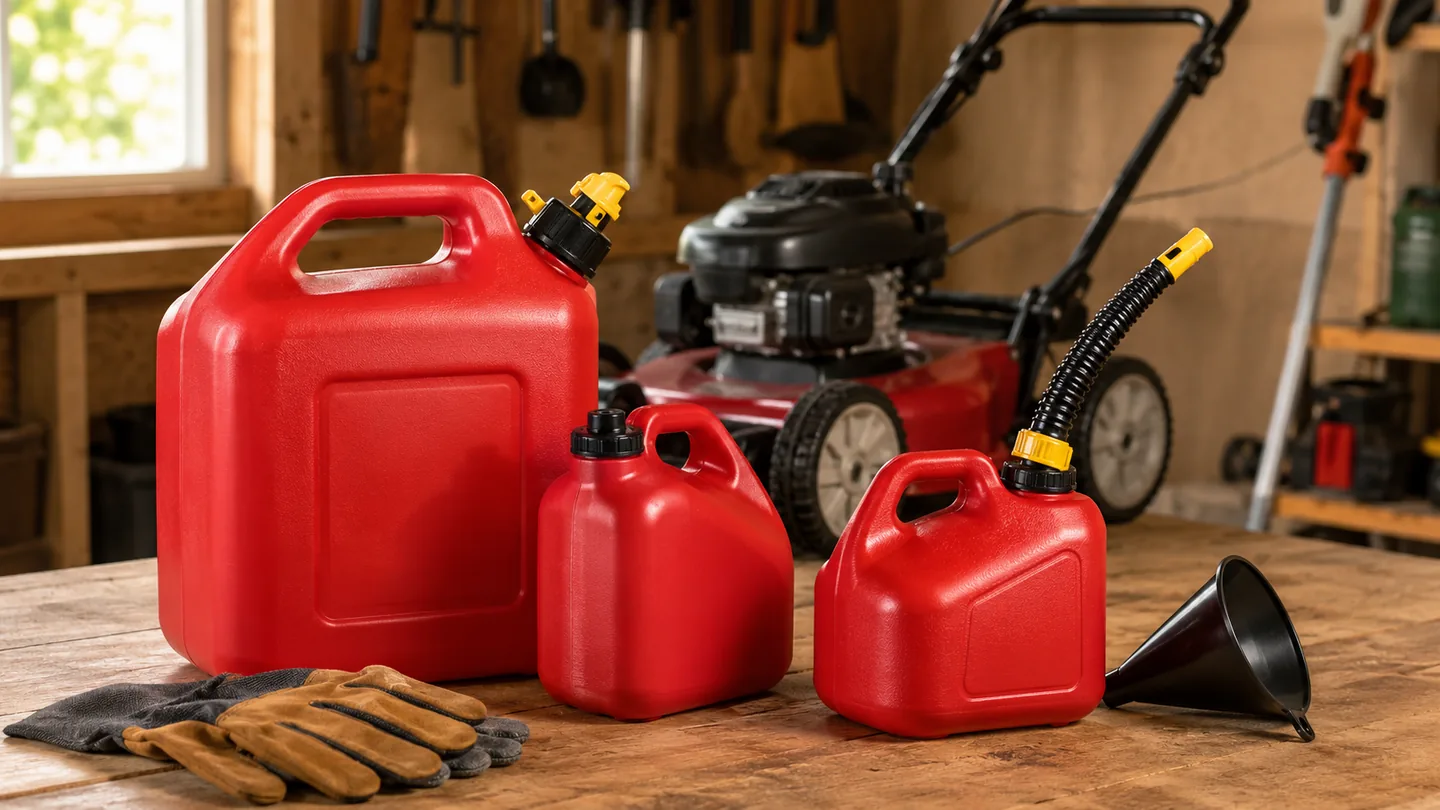
Comparison at a glance
| Gas-can approach | Makes sense when | Tradeoff to consider |
|---|---|---|
| Smaller dedicated can | You use modest amounts of fuel or want an easier lift and pour | More refills, but less weight and less fuel sitting unused |
| Larger dedicated can | You maintain several gas-powered tools and can handle the filled can safely | Heavier to carry and pour; storage discipline matters more |
| Separate labeled cans for different fuel needs | Your equipment requires different fuel types or mixtures | Takes more space, but reduces the chance of grabbing the wrong container |
Start with how you actually use fuel
The right gas can for a homeowner is usually a boringly practical choice. How much fuel do you use in a normal week? How far do you carry the can from the car to the shed? Can you control it while it is full? Those questions matter more than a big capacity number.
If you only run a mower and trimmer occasionally, a smaller can may be easier to live with. If you maintain several gas-powered tools, a larger can may reduce refills, but it also weighs more and leaves more fuel to manage in storage.
A clean pour is not a luxury feature
Fuel on the mower deck, driveway, or your gloves turns a simple refill into a nuisance. Look for a can and spout arrangement that you can operate steadily with the equipment you own. Think about the height and shape of the fuel opening, not just the can itself.
Do not treat the first pour as a learning experience with a full container. Read the can instructions, use it in a suitable location, and take your time.
Labeling prevents expensive mistakes
If you own equipment with different fuel needs, use separate containers and label them clearly. This is especially important when a piece of equipment requires a particular mixture or fuel treatment. A color is helpful; a clear written label is better.
The same rule applies to seasonal storage. Do not rely on memory six months later. Mark what is in the can and follow current equipment guidance for storage and fuel age.
Storage is part of the purchase
A gas can needs a home before you buy it. Consider ventilation, distance from ignition sources, household access, temperature, local rules, and whether the container will be knocked over by bikes or lawn equipment. If that storage plan is shaky, a bigger can is not a bargain.
This matters beyond mowers. A wet-leaf cleanup plan may include gas-powered equipment, and a chainsaw or pole saw decision comes with the same basic fuel-handling responsibility.
Keep the decision simple
Choose the smallest setup that comfortably covers your normal routine, pours cleanly into your equipment, and fits a safe storage plan. That is usually a better answer than buying the biggest can you can carry.
Frequently asked questions
What size gas can should I buy for lawn equipment?
Choose a size you can carry and pour safely when full. Your normal mowing and trimming routine matters more than buying the largest container available.
Can I use one gas can for all my equipment?
Only if the equipment uses the same fuel and the manufacturer guidance allows it. Clearly label containers and do not guess about fuel type or mixture requirements.
Where should I store a gas can?
Follow local rules and the fuel-container and equipment guidance. Keep fuel away from ignition sources and out of living spaces; use an appropriate, well-ventilated storage location.
Related guides

guide · Leaf blowers
How to Choose a Leaf Blower for Wet Leaves
comparison · Chainsaws and pole saws